The Indomitable Frank Whitcombe

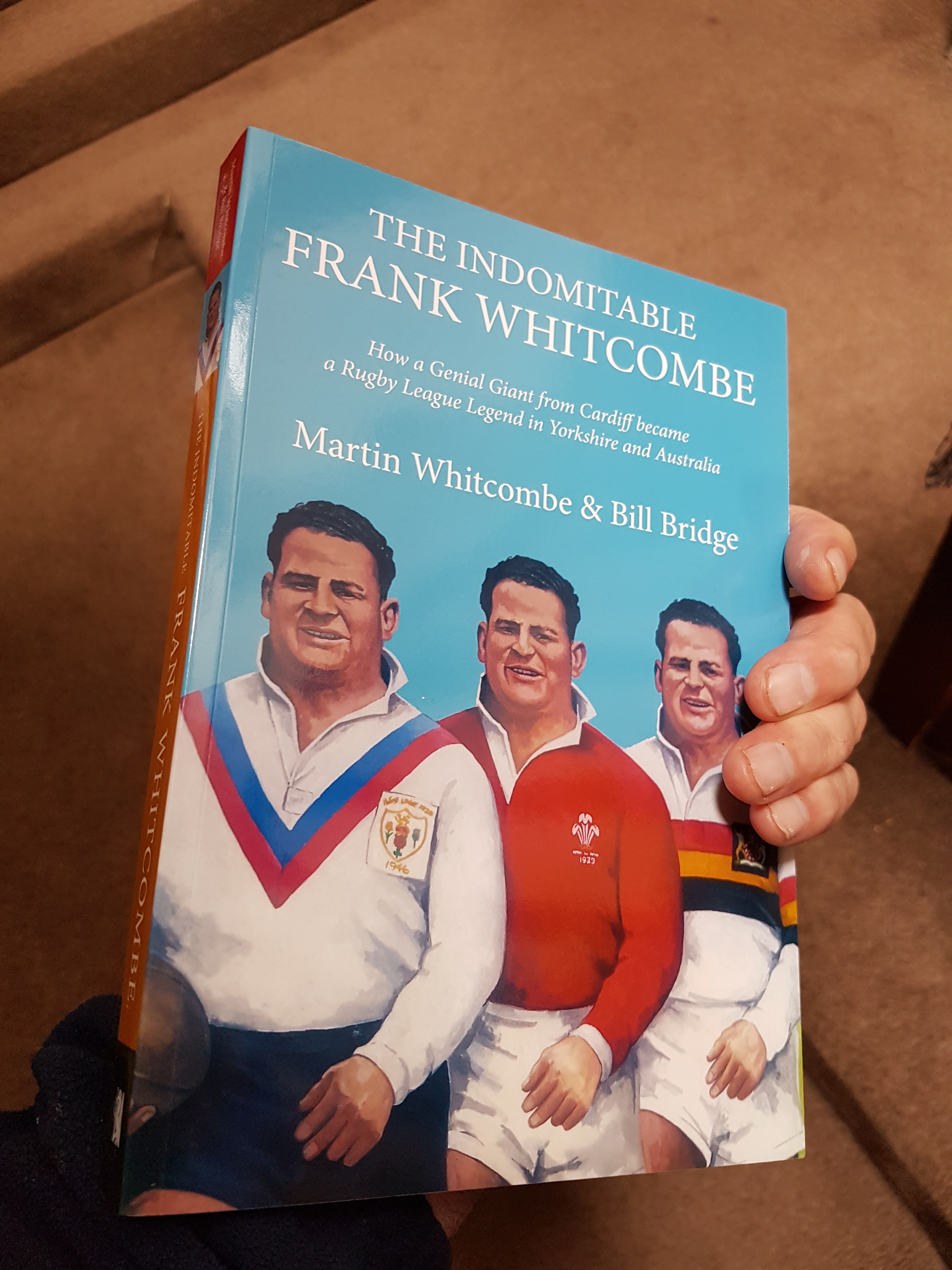
Martin Whitcombe writes about his book published in May, 2016 which will be of interest to all Rugby League followers, particularly Bradford Northern / Bulls supporters…

20160518_124635.jpg

Frank Whitcombe, described as ‘one of the greatest Welsh rugby league forwards of all time’, played for Bradford Northern, Wales, and Great Britain. Adored by Bradford supporters and admired by the rugby league fraternity, such was his prowess that he was named in the Bradford Northern all-time greats team. The Indomitable Frank Whitcombe lovingly tells the incredible story of a rugby league legend who was born and raised, as one of ten children in Grangetown, the heart of working-class Cardiff.

Frank s rugby career, after a brief and successful spell as a boxer, began in rugby union, when he played for the British Army and London Welsh, as a deceptively nimble and skilful 18 stone forward. His talents were quickly spotted by rugby league scouts, and Frank was persuaded to go north for £100 and two new suits, although the cost of buying himself out of the Army left him just £10, and the suits! Frank was made for rugby league and he enjoyed a glittering career in professional rugby, winning the RL Challenge Cup three times, the RL Championship three times and was capped 14 times by Wales. He quickly created a big impression on the Great Britain selectors and he was chosen for the famous 1946 Indomitables tour of Australia.

Frank excelled as the tourists made history and won plaudits from antipodean fans and media alike as the team became the first, and to date only GB tourists, to win a rugby league Test Series, undefeated, down under.

After 331 games, Frank bowed-out of rugby with Bradford Northern, four days after playing in a Challenge Cup final at Wembley, in his last match at Odsal; a game which attracted 19,000 fans. He then turned to life as an RL administrator and publican before his life was tragically cut short by pneumonia at the age of only 44. Frank was a true giant of rugby league and this is the first book to tell his remarkable story.

1st-test-4_17061946_0020_cr-2

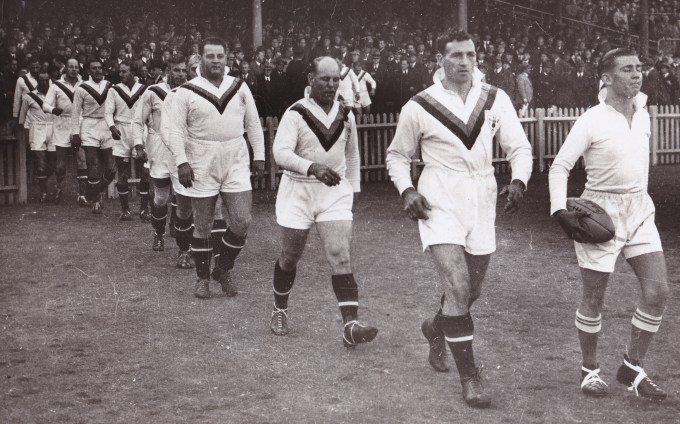
1946 1st Test Sydney England v Australia Tour captain Gus Risman (Salford)  leads the team on to the field at the Sydney cricket ground followed by Tommy McCue (Widnes) and Frank Whitcombe (Bradford Northern)

Reviews of the book have been very positive…

‘We both played for Cardiff RFC and for Bradford Northern RLFC; we both played at Wembley in Challenge Cup finals; and we both played for Wales and Great Britain. We were both prop forwards and when our playing careers were over we both went into the licensed trade. I am so proud to have walked the same path as this wonderful man did.’
Jim Mills, Cardiff RFC, Bradford Northern, Wales & Great Britain

‘Frank Whitcombe became a Welsh international and a Great Britain tourist. He is widely regarded as an all-time great of rugby league. Dad always enthused, not only about his scrummaging and play in the loose; but that he was very light on his feet for a huge man, a surprisingly good place kicker and an excellent tactical kicker of the ball. This was unheard of back then and even now it is rare to see such skills from a prop forward.’
Fran Cotton, Sale, England and British Lions

‘Frank Whitcombe was a rugby league cult hero in the days before there were cult heroes. An eighteen-stone battle tank of a prop forward, he graduated from Welsh rugby union to become a pillar of the great Bradford pack of the 1940s. In the process, he became the first forward to win the Lance Todd Trophy, a member of the 1946 Indomitable Lions touring team to Australasia and had even driven the team bus to Wembley when Bradford won the 1947 Challenge Cup Final. This book is his story – it is essential reading for anyone interested in the history of rugby and the amazing men who made the game.’
Prof. Tony Collins, De Montfort University, author of ‘The Oval World’.

2015-07-29 16.52.26.jpg
Roll out the barrel, Frank Whitcombe in his cellar at  the Hallfield Hotel,  a Melbourne Breweries Ale House on Trafalgar Street, Bradford
 1948-01-17-wigan-v-bfd-northern
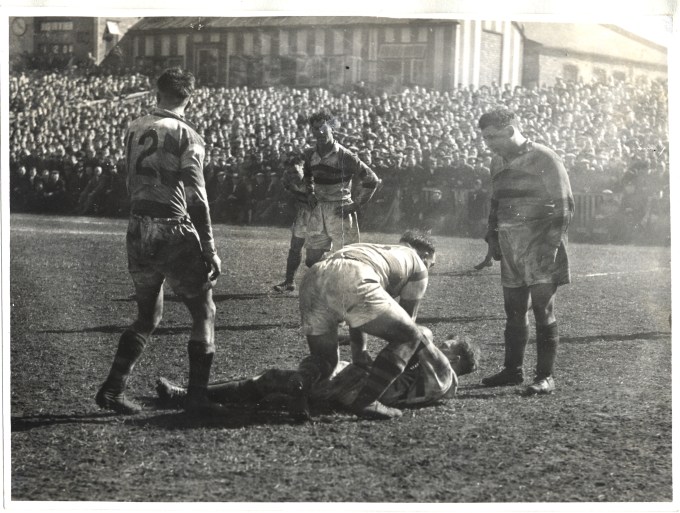
17th January 1948, Central Park Wigan: Wigan 14 7 Bradford Northern. Wigan forward Ken Gee standing over the tackler and Billy Blan are watched closely by Bradford Northern players R-L Frank Whitcombe, Trevor Foster and Herbert Smith  


About the Author
Martin Whitcombe is Frank’s grandson, who also enjoyed a successful rugby (union) career with Leicester Tigers, and England B. Today he lives in West Yorkshire and is a keen follower of both rugby union & rugby league. Bill Bridge is a retired journalist who was Sports Editor of the Yorkshire Post for almost 30 years and wrote about rugby union for 25 years. He met the Whitcombe family whilst working for the Keighley News and remains a family friend.

The book is published by St David’s Press Cardiff and is available direct from them at £19.99 or Amazon, Waterstones on line, Bradford and Cardiff Waterstones stores.

f-hughes-f-whitcombe-bordeaux-cipxhypuuae3obu1

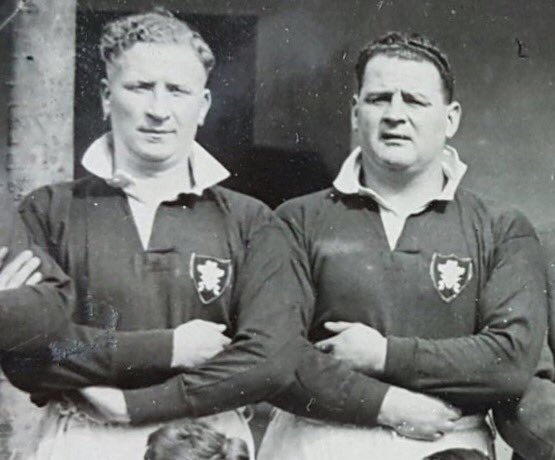
Welsh prop forwards Fred Hughes (Workington) and Frank Whitcombe (Bradford Northern) Fred was Emlyns Dad, the Liverpool FC and England football captain

The Worst of Times – A Look at Bradford City’s Lowest point in League Football

by Ian Hemmens

The 1960s proved to be a very odd decade for the club starting with a relegation to the bottom tier of the Football League, a promotion at the end of the decade and in between, 3 near misses in the promotion race and more ominously, 2 seasons with the ignominy of having to go cap in hand to the fellow league clubs for their support as the club had to apply for re-election. Add to all this the obligatory financial crisis and it seems like business as usual for City.

Thankfully, the club has never felt the shame of finishing at the foot of the whole football league but on 2 occasions it came pretty close. Two 23rd place finishes in the 1960s made the decade a low point of the clubs history. In fact, for Bradford it was a desperately poor sporting decade. Speedway had packed up for the 2nd time, City struggled and cross-city rivals Bradford Park Avenue hit the skids mid-decade and never recovered getting the boot from league football in the 1969-70 season and finally having to call time in 1974 crushed by mis-management, financial trouble and Council indifference from the City authorities.

City themselves under the managership of Bob Brocklebank who had arrived in May 1961 had a real roller coaster of a time under his tutelage. City had been relegated to the new Division 4 in 1961 under the long serving Peter Jackson snr. and Brocklebank inherited a side with a decent amount of talent with a goalscorer in David Layne, a solid reliable defence with Flockett, Mollatt, Harland & Mike Smith. There were also the shoots of a promising youth policy with Trevor Hockey, Bruce Stowell, Brian Kelly, Roy Ellam & England schools keeper David Roper all starting to make claims for a place in the side.

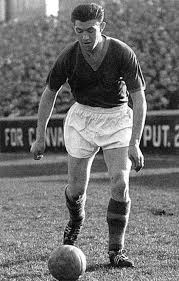
John McCole.jpg

Added to that was return of former record goalscorer & crowd favourite John McCole (pictured) from Leeds United and the solid signings of Barry Tait & Tommy Hoyland. Farewells were said to long term favourites Johnny Reid, Bobby Webb & Derek Hawksworth & sadly, through injury, Jim Lawlor as Brocklebank shaped his side. A superb run from New Years Day 1962 with only 2 defeats saw the side agonisingly miss out on promotion by 1 point. Even ‘Bronco’ Layne smashing the clubs goalscoring record with 34 league goals ably backed up by McCole & Tait couldn’t compensate for the agony of missing out.

 The following close season saw the inevitable departure of star striker Layne to Sheffield Wednesday who would later gain notoriety for his part in the betting scandal  of the mid 60s which would cost him not only his career but also, for a while, his liberty. The young upcoming star Trevor Hockey was also sold for a record £15000 fee to Nottingham Forest. Journeyman Barry Tait also left but Bob Brocklebank was left with the core of his side still available to him. Incoming signings included inside forward Barry Webster from Rotherham & Peter Bircumshaw from Notts County and a young winger who had been on amateur forms signed his first professional contract. He would go on to be a major part of Citys history in the decade, his name John Hall. It was anticipated that Johnny McCole would take over the goalscoring mantle of the departed Layne but sadly, the combination of a previous broken leg and even more sadly a burgeoning drink problem saw him far less effective than his previous spell at the club where he had achieved his rightful place as a City legend by breaking the long term scoring record of FA Cup hero Frank O’Rourke.

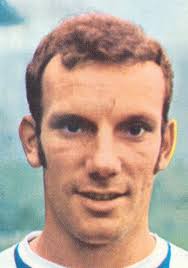
The 1962-63 season began fairly decently with only 2 defeats in the first 8 games although McCole only managed 1 goal, it appeared that the team might well be challenging again and showed no sign of a hangover after the near miss of the previous season. The goals were being shared around the team which had a settled look but towards the end of September the side started hitting runs of games without picking points up several times having runs of 4 games without a point as they started to slide down the table. Manager Brocklebank was never under pressure jobwise with the board showing commendable faith in him to put it right as he shuffled the pack to get the side back on track. Youngster Hall was given his debut and fellow youngsters Ellam (pictured), Kelly & Stowell all had runs in the side but nothing seemed to work as City struggled to find any form at all. During the season, never once did the team go more than 4 games without a defeat and that included 3 draws. Consecutive defeats on the other hand were a regular occurrence as the team struggled to find any form at all. John McCole’s disappointing 5 goals from 20 games was a huge shock to City fans who had idolised ‘King McCole’ 5 seasons earlier. A sad end to club legend came in January when he left for Rotherham but his career never hit the same heights again and sadly he was a shadow of the goal machine of his younger days. City needed goals urgently and City looked over to Horton for McCole’s replacement. Avenues bustling striker Rodney Green came across the City to provide more firepower and presence to a frankly, lightweight attack.

roy-ellam

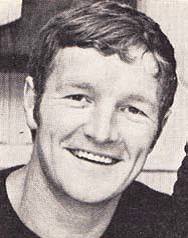
 Due to the harsh winter of 1962-63 football was hit hard and City went nearly 3 months without a game and despite signing in December, Green (pictured) had to wait until March 1963 to make his debut in an auspicious 0-5 defeat away at Crewe. It didn’t look good for the restart and a push for safety from re-election. He got off the mark in his second game and the scored a brace at home to Chester but it proved a false dawn as the side then went on a 3 game losing streak.

Rodney Green.jpg

The return after a 5 month injury break of Mike Smith proved another false hope as Manager Brocklebank ‘tinkered’ with personnel and formations to find a combination that worked and during the second half of the season, nobody actually gave City a big beating, several losses being by the odd goal but a record of only 4 wins in the second half of the season since the enforced lay-off  showed the clubs problem. Green finished with a creditable 10 goals from 22 games in a struggling side and decent support was given by midfielder Harland & winger Webster with 8 goals apiece but a distinct lack of goals and a tendency to give away cheap goals at the other end proved their downfall as the club finished in an all time lowly position of 23rd in the bottom division of English football. At least it was saved the embarrassment of actually finishing bottom by a 7 point gap to perennial strugglers Hartlepool United to the shame felt by fans at the clubs decline over the years from a 1st Division side and FA Cup winners to bottom division strugglers was hard to take although it was probably the past fame and good name in the game which saved them when it came to applying for re-election and going cap in hand to Football League to save their status. Although nothing could be said, it would have been embarrassing for the League to kick out a former Cup Winner albeit a long 50 years earlier and thankfully the club were duly re-elected. It proved a bad season for Bradford football all round as neighbours Park Avenue were relegated from Division 3 to renew the Wool City rivalry the following season. It was possibly the start of Avenue’s decline and subsequent demise.

Looking back now, the 1962-63 season appears to be a blip and a bit of a freak set of results as the season after City were in the fight for promotion until 2 crucial defeats at the end to rivals Workington & York City saw them finish again in 5th place 2 points shy of a place in the 3rd division. Rod Green rampaged his way through the season scoring 29 league goals and newcomer Dudley Price added 15 of own. Only 19 players were used as a consistent team including several of the youngsters coming of age in the team showed a maturity probably borne of the struggles of the season previous. Kelly, Ellam, Stowell & Hall all playing significant parts in the ‘nearly’ season.

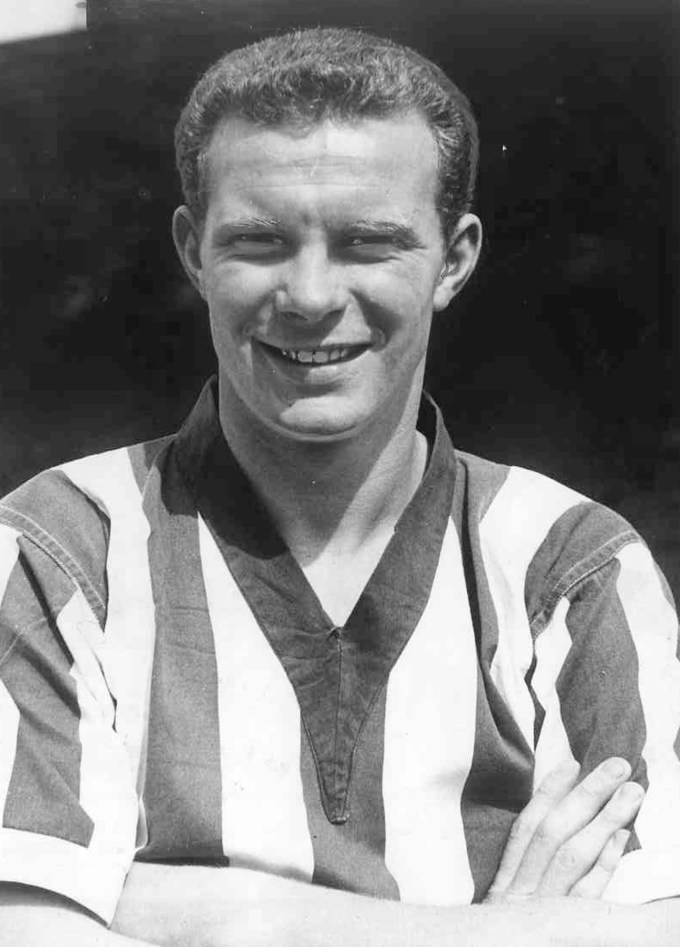
 The club suffered by selling star striker ‘Bronco’ Layne (pictured) in 61-62 and it made the same mistake in 64 selling Green to Gillingham in July 64 although finances probably dictated the move. The 1960s proved a turbulent decade for the City club until Stafford Heginbotham took over the club and despite an early struggle lead the club to its first promotion for 40 years as the decade neared its end.

DavidLayneweb.jpg

1965-66 saw City once again finish in 23rd position before the ‘rebirth’ under Stafford but the playing record was marginally better despite finishing only 2 points better off than bottom club Wrexham. Statistically 62-62 was the worst finish on record in the clubs history and the club seriously flirted with both being kicked out of the league and financial meltdown. Thankfully the club survived to create more history in the forthcoming years although sadly it would do it alone as Avenue went into terminal decline in the 1960s from which it never recovered finally closing in 1974. The Wool City Rivalry was over but for City the season had been to quote a famous saying ‘The Worst of Times’

Donald Simpson Bell – the Bradford footballer awarded the Victoria Cross, tribute by Mike Stead

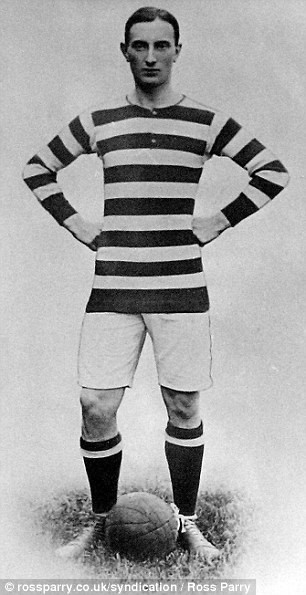
Donald Simpson Bell, born 1890; died 10 July 1916 (Age 25). Place of Death: Contalmaison, the Somme, Northern France. Bradford Park Avenue Footballer and Schoolteacher.

donald-bell-1

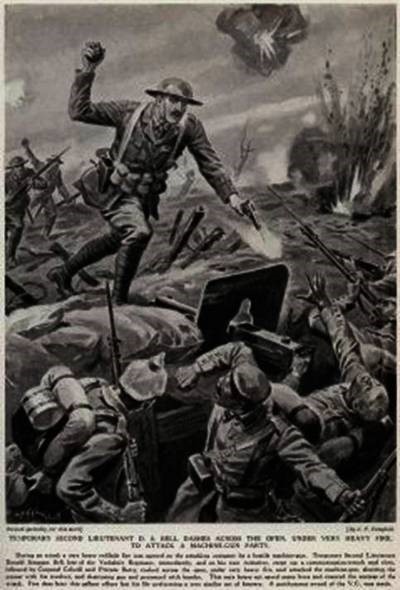
London Gazette Notice of Death 9th September 1916: Temp. 2nd Lt. Donald Simpson Bell, late York. R. For most conspicuous bravery. During an attack a very heavy enfilade fire was opened on the attacking company by a hostile -machine gun. 2nd Lt. Bell immediately, and on his own initiative, crept up a communication trench and then, followed by Corpl. Colwill and Pte. Batey, rushed across the open under very heavy fire and attacked the machine gun,, shooting the firer with his revolver, and ‘destroying gun and personnel with bombs. This very brave act saved many lives and -ensured the success of the attack. Five days later this gallant officer lost his life performing a very similar act of bravery.

Tribute from Lieutenant Colonel HG Holmes: “He was a great example, given at a time it was most needed, and in his honour, the spot where he lies and which is now a redoubt, has been officially named Bell’s Redoubt. He is a great loss to the Battalion and also to me personally, and I consider him one of the finest officers I’ve ever seen”.

Donald Bell was just 24 and starting out on his professional football career in 1914 when the world broke out into war. He had played five first team games at Bradford Park Avenue under the manager and great orator Tommy Maley as Bradford reached the top division (today Premier League) for the first and only time. Of 5,000 estimated professional footballers in 1914, 2,000 are estimated to have taken some part in the hostilities of war.

Donald Bell was one of two professional footballers to be awarded the Victoria Cross (Graeme Wright advises that the other was William Angus of Wishaw Thistle who had transferred to that club as a professional in 1912 from Glasgow Celtic). No higher medal can be awarded in respect of acts of supreme bravery/gallantry. So famous is this man, that the Professional Fooballers Association paid over £252,000 to purchase his medal just five years ago and this can be viewed in the Football Museum Manchester.

The Battle of The Somme is where our hero Donald lost his life and achieved in death his world wide fame. Over one million people were to lose their life at the Somme.

Donald a junior officer saw his colleague wiped out with machine gun fire and his athletic prowess was quickly put to use as he first crawled up a trench then ran across open ground at speed towards the German machine gun post.

As he approached he threw his Mills bomb into the defence killing some 50 Germans and shot with his pistol the gunners that had been killing his men. This was on the 5th July 1916.
donald-bell-2
Five days later he attempted the act again and lost his life.

He had been married just 5 weeks to Rhonda. They lived at Harrogate and Donald was also a schoolteacher at the Starbeck School near Knaresborough. Donald’s regiment was the 9th Battalion Yorkshire Regiment better known as The Green Howards.

After his heroic act he quickly and very modestly wrote home to mum from the Western Front. He wrote to his mother two days later: ‘I must confess it was the biggest fluke alive and I did nothing. I only chucked one bomb but it did the trick… my athletics came in handy this trip.’


Donald Bell’s VC medal can be seen at the National Football Museum in Manchester, near Victoria  Railway Station.

He died trying to save his men. Men that he was very close to, many who never returned to their families. R.I.P. Donald Bell. A truly inspirational man who gave of his life in that others may live.

Mike Stead 2016

Recognition of Bradford’s rugby heritage

The news that the RL museum is to be based in Bradford may have come as a surprise to many people who considered places such as Huddersfield (the ‘birthplace’ of the Northern Union) and Wigan (a town with an identity defined by rugby) to have a stronger call. However it overlooks the fact that Bradford was a leading centre for the development of rugby football in nineteenth century England and that its two senior clubs, Bradford FC and Manningham FC – forerunners of Bradford (Park Avenue) and Bradford City association football clubs – were among the 22 founder members of the Northern Union in August, 1895.

Both clubs played a major role in determining the history of rugby in this country. Theirs was the story of two competing businesses who struggled to co-exist. Fundamentally they were more alike than their followers cared to admit. Their differences were defined principally by urban geography as opposed to social class. Bradford FC, based at Park Avenue – a Victorian cathedral of sport – was the high church alternative to Manningham FC, its non-conformist rival. Between them they represent case studies of how rugby became established as an entertainment industry in the Victorian era. In this regard the example of the Bradford clubs was foremost as an illustration of how a sport became commercialised.

During the nineteenth century Bradford had been one of the fastest growing urban centres in Britain and it was essentially an industrial frontier town. Sport played a massive role in helping to shape the town’s identity and civic patriotism. Both Bradford FC and Manningham FC had a big part in this and provide a unique study of how sporting culture evolved alongside urbanisation and the maturation of a town. In this sense, rugby was as much a product of industrial revolution as an industry in itself. The two Bradford clubs bore witness to a sporting revolution and the transformation of a game based on the supply of enthusiasts to one based on the demand (or otherwise) of spectators.

The Bradford club could trace its origins in 1863 although did not play a competitive game with another club until the winter of 1866/67. To that extent the city of Bradford can boast a sequence of 150 years of competitive rugby. However it was not until around 1872 when things became fairly serious and fixtures were a matter of civic pride against other emergent clubs in Yorkshire. By the mid-1870s Bradford FC under the captaincy of Harry Garnett had established a reputation as one of the leading clubs in the county. Consistent with its new found status, Bradford FC actively promoted the formation of the Yorkshire Challenge Cup competition in 1876 which proved to be a catalyst for the formation of clubs elsewhere in Yorkshire. Bradford FC was also a prominent member of the Yorkshire County Football Club from 1874, the organisation which managed the affairs of rugby in Yorkshire, later reconstituted as the Yorkshire Rugby Union. As the oldest club in the county, Bradford FC saw itself as an aristocrat of the game and was boastful of its role acting to encourage its spread.

In my opinion, it was a matter of accident that rugby – as opposed to soccer – came to be played in Bradford. The example of the town’s senior club undoubtedly encouraged the choice of code and once established, the option of soccer was limited by virtue of the fact that there were insufficient playing areas to accommodate both games. In fact, such was the demand for rugby – known in West Yorkshire simply as ‘football’ – that soccer was crowded out.

It was the opening of Park Avenue in 1880 as home to the newly formed Bradford Cricket, Athletic & Football Club that had a further impact on the growth of rugby through commercialising the game. The new ground and development of facilities made it possible for unprecedented crowds to attend. Park Avenue provided Bradford FC with economic advantage and within ten years the club was considered the wealthiest in England, even subject to tax investigation in 1893. By winning the Yorkshire Challenge Cup in 1884, Bradford FC made rugby fashionable in the district and it was this achievement that led to the formation of junior clubs in every surrounding village and the popularity of the local Charity Cup competition.

Manningham FC had emerged in 1880, in circumstances indirectly related to the opening of Park Avenue and the changes that this created to the composition of other local sides. By 1885 Manningham FC had reached the final of the Yorkshire Cup and established itself as a rival of Bradford FC. That rivalry would become increasingly bitter, akin to a blood feud and this defined the future relationship of the two successor football clubs.

There were numerous incidents that antagonised relations between the two but fundamentally the rivalry was that of business competitors. With relocation to Valley Parade in 1886, Manningham FC became established as a genuine economic threat to Bradford FC which resented the loss of its monopoly. It was not without substance that Manningham members perceived attempts by the Park Avenue organisation to extinguish their own club. Neither missed the opportunity to undermine its rival when the opportunity presented itself and collectively their conduct made a mockery of notions of Victorian sportsmanship.

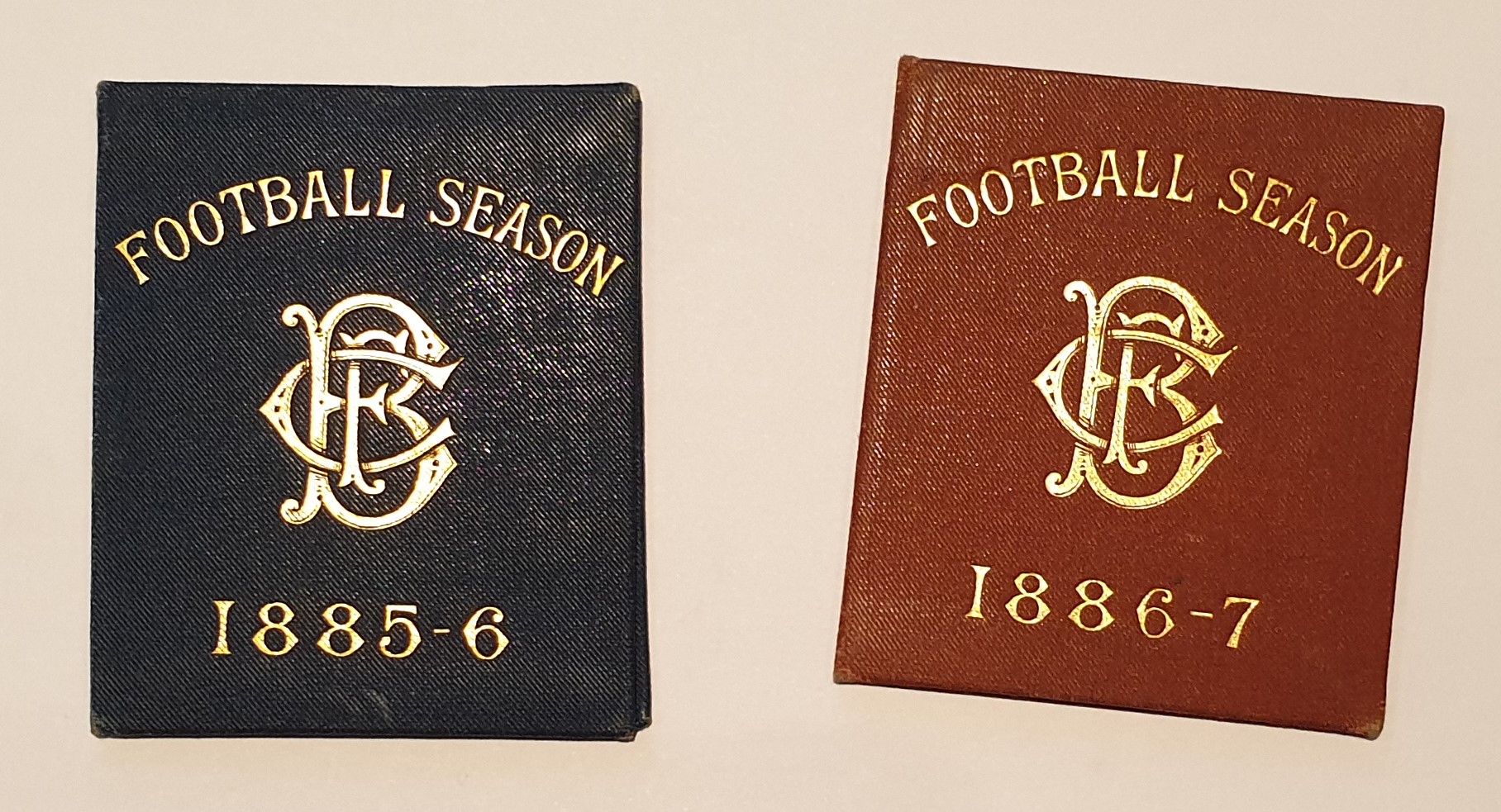
Bfd FC monogram crest - member season passes.jpg

Of the two, Bradford FC remained the senior and during the ten years prior to 1895 consistently provided at least two members in the England XV. In fact, of all the northern clubs it was Bradford FC that contributed the most internationals during this period. Yorkshire was by far the strongest county when it came to rugby and outsiders viewed Bradford FC as the biggest club in the Broad Acres. Indeed, Bradford FC came to be regarded as one of the leading clubs in Britain alongside Newport, Blackheath and Edinburgh Academicals and could command the most prestigious fixtures of all.

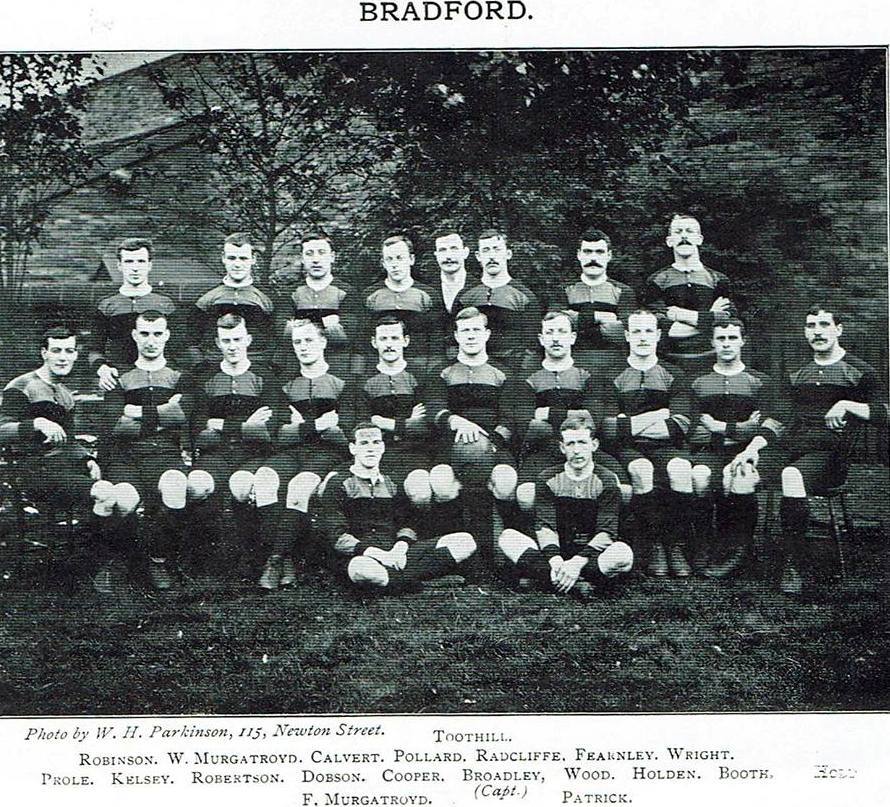
BFC 1901 (2018_07_29 21_34_58 UTC)

In 1895 the two Bradford clubs became founder members of the Northern Union. The commitment of Bradford FC was not confirmed until the final moment and when rugby was later abandoned at Park Avenue in 1907 the club was unfairly described as having always been lukewarm towards the breakaway competition. In 1909 this led to remaining members in the Northern Union seeking to withdraw ‘founder status’ from the phoenix Bradford Northern club at Birch Lane. Bitterness also surrounded the defection of Manningham FC in 1903 and the formation of Bradford City AFC in the same year; the fact that Manningham FC had been winners of the inaugural Northern Union championship tended to be overlooked. In both cases, soccer was adopted at Valley Parade and Park Avenue because rugby was no longer a game that would pay.

After the end of World War One rugby enjoyed a revival in Bradford but it was the amateur Rugby Union club, Bradford RFC rather than Bradford Northern – so called to highlight the fact that it was a member of the Northern Union – who stole the headlines. In fact Bradford Northern struggled for most of its first twenty-five years to remain solvent. The club’s fortunes were transformed by the opening of the Odsal Stadium in 1934, the potential of which captured the imagination of the Rugby League community as a northern alternative to Wembley. That potential was demonstrated in 1954 by a record, reported 102,000 crowd at Odsal for the Challenge Cup Final replay. The prestige offered by playing the annual Challenge Cup Final at Wembley meant that the London venue was retained and this, as well as jealousies within the Rugby League ultimately robbed Odsal of its opportunity to stage massive crowds on a more regular basis.

Bradford Northern struggled with the financial commitment to maintain the stadium, let alone to develop it extensively. The affairs of Bradford Northern became closely interlinked with the economics of Odsal. After establishing itself as a leading club in the Rugby League just after World War Two, by the second half of the 1950’s Bradford Northern was struggling and by 1964 succumbed to insolvency and disappeared from fixture lists for a year.

The record of Bradford Northern during the 1970s and 1980s was pretty undistinguished but the club was revitalised by the Super League in 1996 and reincarnated as Bradford Bulls. At last it seemed that the Odsal side could benefit from the size of the city that it represented. In 1996 the Bulls were inaugural champions of the Super League and in 2002 crowned as World Club Champions. For reasons best explained by others the last five years have been a period of financial difficulty and the Bulls have suffered the wrong type of headlines. Yet the fact that the Bradford side no longer dominates the Rugby League does not detract from the fact that it symbolises the ongoing struggle of professional rugby to compete with the soccer juggernaut. The very financial failings of Bradford FC / Bradford Northern / Bulls are testament to the competitive environment in which Rugby League has had to co-exist with soccer. As an added twist to the story, Bradford FC was among other West Yorkshire clubs who briefly promoted soccer alongside rugby as a form of commercial insurance in the latter half of the 1890s.

The history of Bradford rugby has demonstrated all the extremes that sport can offer – from success to disappointment, from profit to loss. Yet it was not just the story of two senior clubs because Bradford was home to a good number of junior clubs. Notable is that virtually all of them had disappeared within five years of the launch of the Northern Union; interestingly, none of them had been enthusiastic about the breakaway competition in 1895. A closer look at the experience of those smaller clubs offers fresh perspectives about the Northern Union and a challenge to some of the myths that have surrounded its early years.

The sporting reputation of Bradford has been coloured by the record of its clubs in the twentieth century for whom underperformance and financial failure was the norm – not to mention the Valley Parade disaster in 1985 which was itself a product of financial failings. The historic heritage of Bradford as a pioneering sports town has sadly been overlooked but I welcome the opening of the National Rugby League museum in 2020 as a form of recognition for the part that Bradford played in the sporting revolution of the nineteenth century. Although I write as a soccer enthusiast, the common football heritage of rugby and soccer in the city should not be ignored and in particular the events of the decades that preceded the formation of the Northern Union in 1895. Above all, the history of Bradford FC and Manningham FC explains exactly why the Northern Union was formed in the first place and its uneasy co-existence with soccer from the very beginning.

John Dewhirst

John is the author of ROOM AT THE TOP and LIFE AT THE TOP which tell the story of the origins of football in Bradford, the development of Park Avenue and Valley Parade and the later conversion from rugby to soccer.

Details of the books in the Bantamspast History Revisited series

His blog: Wool City Rivals

POSTSCRIPT: Feature on World Rugby Museum website

Other online articles about Bradford sport by the same author

The drop down menu above provides links to other content about the history of rugby in Bradford.

***Sadly the plans to bring the museum to Bradford came to nothing, a result of funding constraints.

——————————————————

Bradford football: Taking the Long View

A reputation of failure?

One can be forgiven the observation that the modern history of Bradford football – by which I mean rugby and soccer – has been dominated by financial failure and disaster. In the last hundred years there has been a financial scare involving at least one of the three professional clubs – City, Avenue or Northern – in each decade. It is a truly astonishing record; quite literally there have been more crisis appeals and fund-raising initiatives than league or cup triumphs. And only in the last few weeks have we heard news about winding-up petitions leading to speculation about the solvency and future of Bradford Bulls RLFC.

Since the start of this century there have been crises at both Valley Parade and Odsal. Indeed, neither Bradford City nor Bradford Bulls are strangers to administration procedures. In the space of twenty years, the city’s three senior clubs all succumbed to insolvency. In 1964, the former Bradford Northern club was dissolved and went out of existence for twelve months. Ten years after that came the liquidation of Bradford (Park Avenue) AFC and the following decade saw the collapse of Bradford City in 1983.

Yet if Bradford has the unwanted reputation as the city in which professional sport has been more prone to failure, consider the fact that in the forty years preceding World War One it was considered a centre of sporting excellence and a pioneering sports town in West Yorkshire. Its cricket club – formed in 1836 – had a reputation for ‘pluck’ and was among the leading sides in Yorkshire. Bradford FC was the oldest rugby club in the county with its origins dating to 1863 and at the beginning of the 1890s was regarded as one of the leading sides in the country, consistently boasting at least a couple of players in the England XV. Its two clubs – Bradford FC and Manningham FC – were founder members of the Northern Union breakaway in 1895 and the Paraders were inaugural champions in 1896. With the abandonment of rugby by Manningham FC in 1903, Bradford City was the first soccer club in West Yorkshire, promoted to Division One five years later and winning the FA Cup three years after that.

It was not just footballing activity that enhanced Bradford’s reputation. Bradfordians were known for their capability and enthusiasm in other sports that ranged from cricket to cycling, gymnastics and for that matter, chess. All told the city became known for the sheer vibrancy of activity, exemplified by the popularity of grass roots soccer under the umbrella of the Bradford & District FA at the beginning of the twentieth century. The success of the Bradford Cricket League after 1903 is another example of the enthusiasm for sport in the area measured by levels of participation as well as spectator attendance at local games.

Bradford was also known for the fact that its clubs were recognised for pioneering the commercialisation of sport. The original Bradford Cricket Club had been the first in this direction during the 1850s and 1860s but it was the opening of Park Avenue for cricket and football in 1880 that took it to a new level. By 1890 Bradford FC was reputedly the richest sports club in England, the subject of tax investigations in 1893.

Why did it go wrong?

The success of Bradford sport prior to World War One is in contrast to the general malaise of the city’s professional clubs that existed during the next 75 years. Ironically the one club which enjoyed sustained success during this period was the – amateur – Rugby Union side, Bradford RFC between 1919 and the mid-1930s.

The explanation for the barren decades of the twentieth century was not because the people of Bradford were uninterested in sport. Far from it. Failure came principally because sporting efforts and resources in the district were fragmented between four competing clubs – Bradford City and Bradford Park Avenue in the Football League and then Bradford Northern RLFC and Bradford RFC participating in the two rugby codes. Little wonder that the city struggled to support them all. Notwithstanding that financial collapse of City, Avenue and Northern arose in the first instance from the failure of financial management in those clubs, the odds for success were ultimately stacked against them.

The emergence of Manningham FC had led people to ask in the early 1880s whether Bradford could support two clubs and it was the success of Manningham in cup competition that persuaded people that there was room for more than Bradford FC. Indeed, it was this confidence that led to the commitment to develop Valley Parade in 1886. Twenty years later people were no longer convinced and in 1907, an argument for the merger of Bradford City with Bradford FC – and with it, relocation to Park Avenue – was based on the fact that Bradford could not support two senior football clubs.

A taste of the future had been provided in 1896 when even the Bradford club was forced to appeal for funds from the public to avert a financial crisis. The commitment to purchase and develop Park Avenue proved onerous and the financial challenge was all the greater because of the competition from Manningham FC for floating spectators in the city. The rivalry of the two clubs was intense, akin to that of a blood feud but the relationship between them is better understood as that of business rivals. The economic reality is that whilst they each had a hardcore of partisan followers they appealed to the wider Bradford public who picked and chose respective fixtures to attend at either Valley Parade or Park Avenue.

The so-called ‘Great Betrayal‘ in 1907 and the abandonment of rugby at Park Avenue defined the future of sport in Bradford. That year brought the formation of a second soccer club – Bradford Park Avenue and the formation of a new northern union side – Bradford Northern. Those who favoured the amateur rugby code decamped to the likes of Bradford Wanderers RUFC (then based at Red Beck Fields, Shipley) or Horton RUFC (at Lidget Green). The sports-loving public was indulged with a choice of options and the different clubs were left to compete for their pennies.

The last hundred years

In the immediate aftermath of World War One, both Bradford City and Bradford Park Avenue were handicapped by the lack of financial resources to sustain success. The death of Harry Briggs in 1920 removed the Park Avenue benefactor and from being rivals in Division One in 1920/21 the two Bradford clubs were both relegated to Division Three (North). It was relatively unheard of, not just that former members of Division One could collapse this way, but that they failed to bounce back immediately. Timing was crucial. The beneficiaries of the demise of City and Avenue were the likes of Bradford RFC, Huddersfield Town and Leeds who stole their custom. Bradford Northern meanwhile continued on a hand-to-mouth existence through the inter-war period, albeit given a fresh momentum by relocating to Odsal in 1934.

Having won promotion back to Division Two, City and Avenue hit a glass ceiling. It left supporters and directors alike frustrated. Attendances were subject to a gradual decline and both became known as selling-clubs. It defined once and for all the relationship between the Bradford public and its soccer clubs, characterised by cynicism and negativity. Crucially Bradford lost the opportunity for one of its clubs to establish itself as a higher division side, similar to the likes of Wolverhampton, Coventry or even Blackburn and Huddersfield. Seen from this perspective, the story of the last thirty years has been about trying to catch-up for those lost decades.

Once again wartime restrictions impacted adversely on the finances of both City and Avenue. The Paraders had been relegated back to Division Three (North) in 1937 and Avenue followed in 1950. In the immediate post-war period they suffered equally from the popularity of speedway at Odsal and the success of Bradford Northern who appeared in three successive Wembley cup finals between 1947-49. By this stage, the Rugby League variant had become the dominant rugby code in Bradford and thereafter, Bradford RFC rarely attracted large crowds to Scholemoor.

As a winter sport, Rugby League was in direct competition with soccer for the same floating supporters. Had Bradford Northern not fallen into decline in the second half of the 1950s – culminating in the liquidation of the club in 1963 – there seems little doubt that soccer would have been delivered a fatal blow. City and Avenue were by this time in a life or death struggle between them as to who would survive. At the beginning of the 1960s it looked as though City would succumb but in the end, after being forced to sell star striker Kevin Hector, it was Avenue who failed to get re-election to the Football League in 1970 and then disappeared altogether in 1974 after a prolonged decline.

Bradford Northern’s own history prior to the appointment of Peter Fox as manager in 1977 was hardly distinguished but the club returned to prominence by winning the Rugby League championship in successive seasons, 1979/80 and 1980/81. Ultimately it was the Super League that revitalised the club and raised public interest after 1995. Across the city, it took a decade and a new generation of soccer supporters to get behind Bradford City who now had the monopoly as the sole surviving Football League side. It was not an easy struggle to overcome the negativity and lack of self-belief of the Bradford public, many of whom had established allegiances with sides based elsewhere. In tragic circumstances, in 1985 Bradford City returned to the second division for the first time in 48 years.

When Bradford City found themselves in the Premier League in 1999, at the same time that the renamed Bradford Bulls were dominating the Super League, it seemed that history had been rewritten. Prior to then, one club – or one code of football – had achieved success only at the expense of another. But of course the glory days didn’t last and both City and the Bulls fell to earth with the hangover of debts to be repaid.

Is it more than a coincidence that the demise of the Bulls in the last five years or so has coincided with the resurgence and reinvention of Bradford City? The main tactic adopted to attract crowds to Valley Parade has been the same as that which had been used previously at Odsal – that is, cheap affordable season tickets and the attraction of a lively, family atmosphere. The Bulls, it seems, have been out-bulled by the Bantams and it represents a particular problem for that club in its current situation given it can hardly afford to heavily discount its prices.

Back in 1905, the leadership at Park Avenue concluded that the Northern Union rugby game could not compete with soccer. It was consistent with what other pundits were saying elsewhere in Yorkshire and Lancashire, leading to radical changes such as outright professionalism and thirteen aside teams to rekindle public interest in the face of the assault from the rival game. Indeed, the introduction of the Super League in 1996 and with it, summer rugby was similarly a response to compete with soccer. In Bradford, for a time it appeared to have succeeded but who would bet on second division Rugby League being an attractive option for the local public as the Bulls face up to a third season outside the upper tier?

Is there now any way back for Bradford Bulls to regain the ascendancy in the city, other than through the collapse of the Bantams at Valley Parade? Leicester, Wigan and Bristol are examples of places where first class rugby has co-existed alongside soccer at a high level. The case of Leicester could be cited as particularly inspirational but what characterises these three examples is that in each case there is the financial backing of a multi-millionaire. A more pertinent comparison is closer to home – in Leeds the Rhinos have undoubtedly succeeded whilst the team from Beeston has been in the doldrums.

Realistically, the only way for both Bradford clubs to simultaneously enjoy success is for them to enjoy the largesse of one or more benefactors. It is generally accepted that for Bradford City to sustain itself in the Championship the increase in wage costs will need to be bankrolled. The same could surely be said of Bradford Bulls.

Sadly the Bradford of today is not one in which millionaires are commonplace. For that matter, even in the decades preceding World War One there was only ever one man – Harry Briggs – willing to invest unconditionally in Bradford sport. The historic attitude was that football had to stand on its own feet.

The record of Bradford football in the twentieth century was insufficient to attract new investors. In fact, it was considered so toxic that it positively dissuaded wealthy men from getting involved by either guaranteeing bank borrowings or underwriting losses. Despite things having changed considerably for the better at Valley Parade it is notable that when ownership of Bradford City was eventually transferred this year, the buyer was ‘not from these parts’. There still seems an aversion among Bradford businessmen to invest.

The ground question

A seeming constant theme in the history of Bradford football has been the ground question and speculation about the relocation of City, Avenue and Northern. At some stage each club has been linked with each of the two other stadia in Bradford although actual periods of relocation have been fleeting. Northern staged occasional high profile games at Valley Parade prior to the opening of Odsal and the Bulls played there in 2001 whilst Odsal was ‘redeveloped’. Avenue spent a solitary, final season at Valley Parade in 1973/74 and of course City played at Odsal between 1985-86 whilst Valley Parade was being rebuilt.

Like a pendulum, the ground question swings back and forth. After the speculation about City moving to Odsal, the difficulties of the Bulls have prompted the suggestion that they will move to Valley Parade. Yet despite the commercial logic of ground-sharing it has never been a permanent arrangement and talk of it is invariably denounced by partisan supporters. Will it continue to be thus if no-one is prepared to underwrite the Bulls? For all the much-vaunted potential and history of Odsal Stadium can the ground really be afforded?

What of the future for Bradford rugby?

Ground-sharing is an obvious financial solution to safeguard senior rugby in Bradford and maintain a tradition that goes back to the 1866/67 season when a Bradford club first played a competitive fixture with representatives of another town (Leeds). Arguably a 150 year tradition is at stake if the rumours of financial difficulty at Odsal Stadium are correct. My own solution is slightly more radical than simply ground-sharing. I would favour the option of creating a ‘Bradford Sporting Club‘, an umbrella organisation embracing not only professional football (rugby and soccer) but amateur sides also.

The original Bradford Cricket, Athletic & Football Club established in 1880 provided the precedent and its success during the 1880s was seen as an expression of Bradford patriotism in what was then an industrial frontier town. It was an organisation that originally existed to promote sport and athleticism in Bradford and forge a civic sporting identity. The modern day variant would similarly promote a single Bradford identity or brand that was shared by every participating sports club in the district. At one extreme this might involve shared financial stakes in Bradford Bulls and Bradford City. At the other extreme a loose confederation of clubs. Arrangements might exist for the professionals to actively encourage amateur sides through coaching support and use of training facilities. It would represent active community involvement. The idea is that every Bradford club – if not, a select group of representative clubs – would then promote a common, shared identity or brand that sat alongside club identities. This would manifest itself with a shared crest or logo on shirts irrespective whether the team competed professionally or in a local Sunday league. If we accept that Bradford’s problem is not one of image, as opposed to identity, sport could be galvanised to promote unity and a degree of social cohesion.

John Dewhirst

John is the author of Room at the Top and Life at the Top which tell the story of the origins of football in Bradford and the rivalry of Manningham FC and Bradford FC. Further details can be found at www.johndewhirst.wordpress.com


Other online articles about Bradford sport by the same author

John contributes to the Bradford City match day programme and his features are also published on his blog Wool City Rivals  

=======================================================================

Details about the BANTAMSPAST HISTORY REVISITED BOOKS

=======================================================================


Never Forget – 1916

As I think of the words to construct this article, my mind drifts back one hundred years to the Battle of the Somme. For it was on this day, 01 July 1916, that one of the most famous battles during World War One commenced. It is reported that nearly 20,000 soldiers, mainly from Britain and Ireland along with India and South Africa lost their lives on the first day of this bloody battle. By the time the Battle of the Somme, which took place in northern France, had ended five months later, over one million soldiers from both sides of the war had either lost their lives or been injured. I find it hard to imagine what the conditions must have been like for the soldiers in the trenches.

During the BBC1 news programme which aired at 10pm on 29 June 2016, there was a news feature focussing on the Battle of the Somme. Within this piece, the news reporter highlighted that Evelyn Lintott was one of those who tragically lost their life on the first day of the Battle of the Somme. The news item correctly stated that Evelyn played football for Queens Park Rangers and England, but unfortunately they didn’t mention that Evelyn also played for Bradford City.

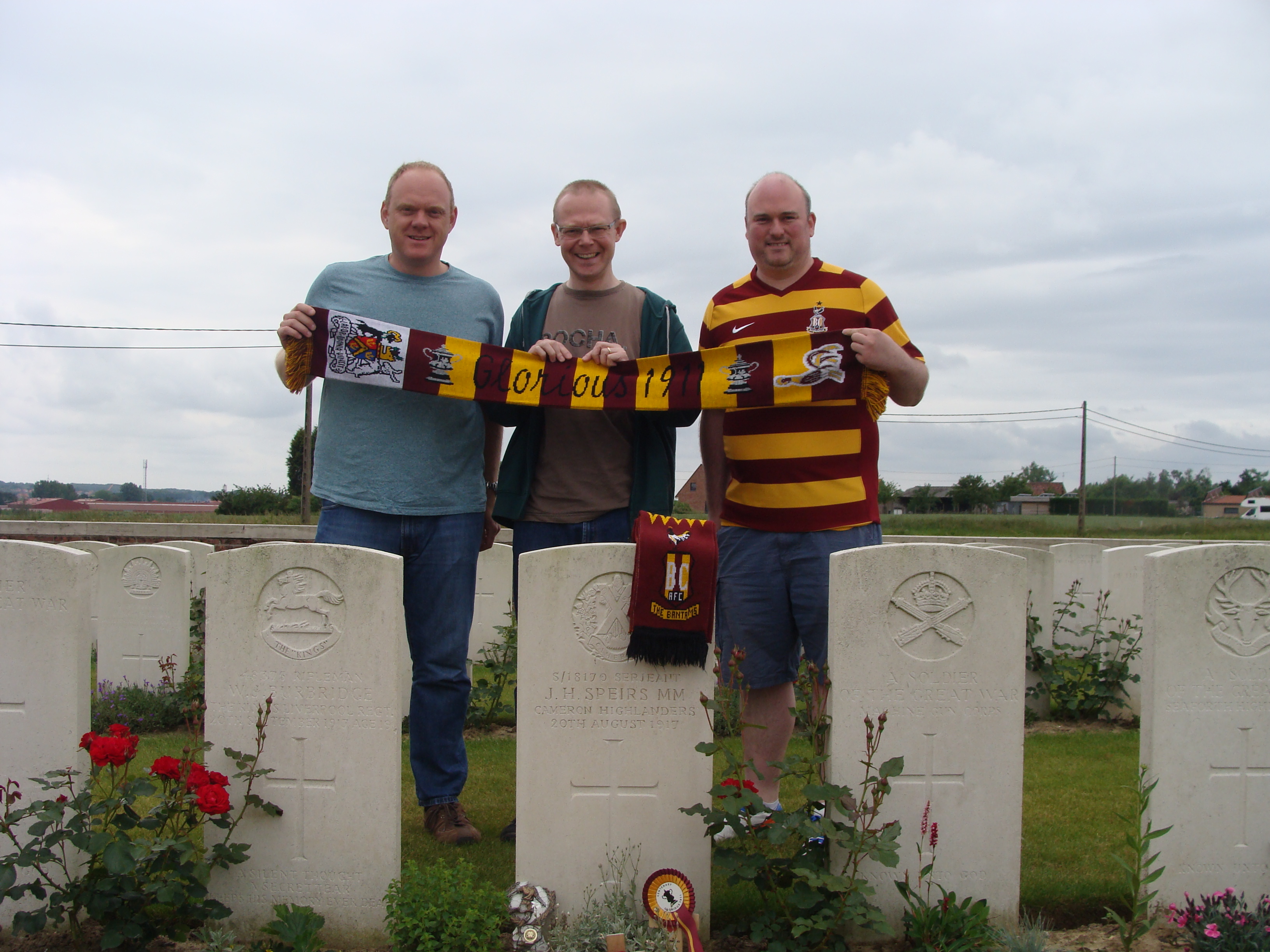
Why am I referring to World War One and a former Bradford City player? Well, please let me continue my story. In early 2015, Andrew Ashcroft and Stephen Onions who are also Bradford City supporters, along with me decided that we would try to obtain some tickets for the Euro 2016 tournament. Indeed, Andrew and I had been to Switzerland and Austria in 2008 to attend a couple of matches during the Euro 2008 event. Thanks to the efforts of Andrew, we obtained tickets via the official UEFA website, for a game in Paris which would take place on 13 June 2016. At this point in time, the draw had not been made for Euro 2016 so we didn’t know who we were going to see play. However, in early December 2015 the draw was made and we knew then that we were going to see the Republic of Ireland play Sweden. Ironically, Andrew and I had seen Sweden lose to eventual winners Spain, back in 2008.

As time moved on, Andrew was keen to obtain tickets for another game as he had originally applied for tickets for three games. In 2016, further tickets were released by UEFA and we were fortunate enough to purchase tickets for the Germany verses Ukraine game which would be played in Lille on Sunday 12 June 2016. During the planning stages for our trip, we decided that we would visit Dochy Farm New British Cemetery. As many well informed readers of this article will know, our goal scoring captain from the 1911 FA Cup winning team, Jimmy Speirs, is laid to rest at this cemetery near Ypres in Belgium.

The morning of Saturday 11 June 2016 arrived. Andrew came to pick Stephen and I up then off we headed to Kent. As we were booked on the 8:30am ferry from Dover to Calais on 12 June, we decided that it would be better to stay in Kent on the evening of 11 June. That evening a few pints from the Shepherd Neame brewery were consumed in the Binger’s Finger pub in Canterbury whilst watching England’s first game in Euro 2016. A last minute goal was conceded against Russia and things were only going to end one way for Roy Hodgson’s squad in this tournament!

We departed the Travelodge at 6:30am on 12 June, much to the surprise of the staff member on the desk. Little did they know that later on that day we were going to pay our respects to Jimmy Speirs and many other soldiers at Dochy Farm New British Cemetery.

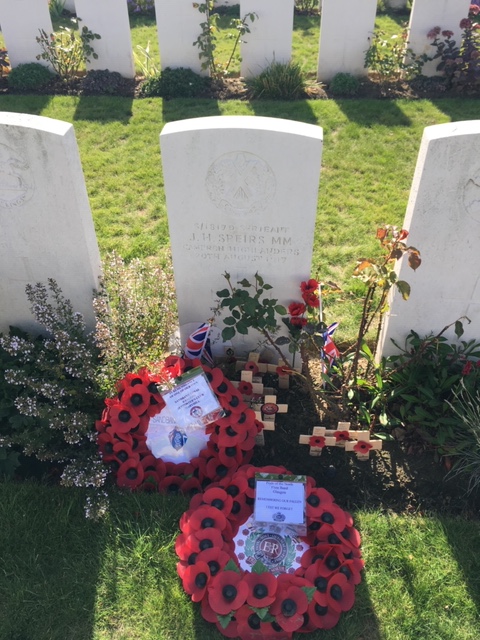
The ferry crossing passed by without any problems apart from queuing for nearly one hour to get on to the ferry owing to the 700 cyclists who were also travelling on the same ferry as us. So into Calais we arrived and then we travelled across northern France and over the border into Belgium. I hadn’t appreciated how many cemeteries there are in southern Belgium where thousands of soldiers are buried. We eventually saw a road sign for Dochy Farm New British Cemetery. I don’t know what I was quite expecting at the cemetery apart from row after row of headstones. As we drove down a rural road, we came across Dochy Farm New British Cemetery on our left hand side with a stone bearing the words: THEIR NAME LIVETH FOR EVER MORE. To be honest, the cemetery was smaller than I had expected even though there are nearly 1,500 headstones there. What I remember most is how quiet and peaceful the cemetery was. The only noise that the three of us could hear was that of melancholic birdsong. Our research had involved locating the headstone for Jimmy Speirs prior to our visit so we had an idea of where Jimmy had been buried. After a few minutes of walking we found his resting place. For a while, Andrew, Stephen and I didn’t speak to one another and stopped to take in our surroundings. I don’t know what Andrew and Stephen were thinking at that moment in time but I imagined how different this landscape must have been a century ago and how less than seven years after winning the world’s greatest cup competition, Jimmy Speirs was killed serving his country. During these sombre moments, I also thought about my mum along with Andrew’s mum, who had unfortunately both passed away in the previous eight months. I can’t remember exactly how long we stayed at the cemetery for, but prior to leaving we did write a note in the visitors book. We also noticed other individuals who had made reference to Jimmy Speirs in the visitors book. Owing to time constraints we didn’t visit any of the other cemeteries in southern Belgium, however we were pleased that we’d found Dochy Farm New British Cemetery.

During World War One Jimmy Speirs achieved promotion to Sergeant with the Cameron Highlanders and was said to show great leadership qualities. Maybe he took these with him from the football pitch? He was also awarded the Military Medal for his bravery. Aged just 31 years young, Jimmy Speirs was killed in August 1917. He achieved so much in a life that ended far too soon. We should never forget or underestimate the sacrifices that many people made in World War One and as Bradford City supporters, we must never forget Jimmy Speirs.

Richard Wardell

Dochy Farm 7


Photo of Jimmy Speirs’ grave by Mark Parkinson below:

IMG_2913

The Roaring Twenties – Rugby Union Reborn

By Ian Hemmens

Rugby in Bradford was THE winter sport. Long before the Association game came along, and long before the ‘Great Split’ of 1895 where a bloc of Northern powerhouse clubs broke away from the RFU in protest at what was seen as a drive by the Southern based ‘Gentlemens’ clubs to put a brake on the success and progress of the North’s clubs by stopping the ‘broken time’ payments to working men in the mills and other industries of the North who gave up their working hours to travel & play in games. It was seen as a step towards professional rugby by the clubs to retain the best players although ironically & hypocritically, the southern clubs always paid ‘expenses’ of various degrees depending on the value of the certain player to the said club.

The Bradford club itself was formed before the RFU itself and by the 1880s was a major power in the land with a strong fixture list against the countries leading clubs. The club continued to be one of the leading lights in the game winning the Yorkshire Challenge Cup known as ‘T’owd Tin Pot’ several times and being a leading player in the formation of the world famous Barbarians club after one notable fixture and a post match ‘oyster supper’ at Leuchter’s Restaurant on Darley Street. The club provided no fewer than 21 International players for the Home Nations all showcasing their talents at the wonderful arena at Horton Park Avenue which the club shared with the Bradford Cricket Club & the Yorkshire County Cricket Club.

All appeared wonderful for the club in its pre-eminent position in both the town & county. Across the town, a junior club was growing quickly and showing huge ambition of its own. The club over at Manningham finally put down roots in its area at Valley Parade and began to grow into a serious rival to the Bradford club. It was a danger to their dominance in the town and by the mid 1890s they were winning trophies also. Also on the horizon was the growing problem of ‘broken time’ payments & professionalism and the growing threat from ‘Soccer’ who had by now formed a competitive league and was playing before growing attendances.

1895 finally saw the ‘Great Split’ with the RFU and the Bradford club adopting professionalism in the Northern Union. A hardy band of traditionalists at Park Avenue were determined to carry on the amateur game and were cast out from the ground to carry on. They named themselves Bradford Wanderers paying for a while ironically at one of Manninghams old grounds at the Branch at Shipley. Several other sites in the City were used and such was the problem of putting down solid roots again it was a case of ‘have posts, will travel’ situation. They joined forces with the Horton club to combine finances & playing strength. By 1913 they were in a position to find a permanent home and the search was on. Men like George Myers, Brothers Herbert & Rawson Robertshaw along with Edward Airey & ex England star Laurie Hickson were the men ready to rebuild the club to new glories.

Unfortunately, 1914 saw events of a far greater concern take over peoples lives as the Great War cast its shadow over the world. The above band of men continued in their task to create a home for the club who by now had been renamed the ‘Bradford Rugby Football Club’. A plot of land at Lidget Green seemed to tick all the boxes and George Myers was a leading light in getting the ground ready ‘for the lads when they come home’. The Lidget Green ground was officially opened in 1919. Although much work had been done levelling, draining & walling it was still very basic & the players had to change in the school on Cemetery Road. Eventually a hut was obtained from the Peel Park gala Committee and put to use as basic changing rooms.

The enthusiasm of the group of ‘re-founders’ was so infectious that it soon spread to the playing staff. Players from various clubs across Yorkshire along with several veterans of the old Horton club answered the call to arms amongst them George Myers own Son Eddie from the Headingley club, destined to become possibly the clubs greatest ever player gaining 18 England Caps as well as 42 Yorkshire Caps.

The fixture secretary worked wonders for the fledgling club no doubt using  the old clubs reputation in the game and possibly calling in a few favours. Clubs of the stature of Blackheath, Leicester, London Welsh, Edinburgh Accies, Rosslyn Park as well as the top clubs in the North all began to appear at Lidget Green with regularity and such quality in itself helped Bradford attract better players to their own ranks. The Bradford Grammar School proved a huge recruiting ground for the club who quickly added extra teams to the roster and an extra playing arena was rented at Bolton Villas for the extra teams to perform on.

Very quickly the teams quality showed through with England trials for Myers, Monk, Roberts & Kinghorn. But for injury, Ferdy Roberts would have won his cap also but despite selection, each time he missed out. Between 1919 & 1928 the club provided no fewer than 30 county players & 5 internationals. At one point there were no less than 17 county players on the staff., a superb show of strength.

After a near miss with defeat to Wakefield in 1920, 1923 saw the team achieve its first honour in winning the T’owd Tin Pot’ and gaining their revenge over Wakefield at Skipton by a 6-0 scoreline. The following year the prestigious trophy was retained, victorious again against Wakefield 14-3 this time at Otley. 1925 saw the club make a hat-trick of victories in the Cup with a resounding 22-9 triumph over Otley, the game played at Ilkley. The first club to achieve a 3 on the trot.

Another major highlight of 1925 was the visit to Lidget Green of the world famous ‘All Blacks’ led by the great George Nepia. They defeated a Yorkshire side 42-4 which featured 7 Bradford players in Myers, Monk, Roberts, D. Smith, Scarth, Wrighton & Haigh-Lumby. The club’s good name was acknowledged nationwide with invitations coming from far & wide for the team to tour including Easter trips to Ireland & the West Country.

Crowds at Lidget Green were well into the 1000s for home fixtures with the Bradford public enjoying the winning Rugby on show. This despite the other attractions on offer of 2 professional football clubs & a professional Rugby League team in the City. The newly developed ground also held 6 Yorkshire Cup finals during the 20s as its reputation as a venue grew. Covered grandstands were added and a clubhouse built along with banked terracing to achieve its potential.

Over the decade, several more touring sides including the Maoris, the Australians visited Lidget Green to play against Bradford and various combined Representative XVs. The home side were always represented well by their strength in depth . As the decade wore on and the clubs top players aged, the finely tuned scouting and development side of the club continued its work and new ‘stars’ appeared to maintain the high standards of the club. New names like Tetley, Simpson, Bonner & Boyce were gaining regular Yorkshire honours as the old guard started to bow out of the limelight.

As the ‘Roaring Twenties’ moved into the 30s the club despite its quality, never again dominated the Yorkshire scene as it had done. It continued to produce good class county players and maintained its prestigious fixture list against the best from far and wide. After WW2 the club continued its existence but lost a valuable source of players when more and more of the BGS boys left for University and then joined clubs who ‘tempted ‘ them away from returning to Bradford for employment as many had done when Bradford was still an industrial powerhouse in the country. “ World Wars a depression and an opening up of the business world es[pecially in the textile world had hit Bradford hard and the City was hit by a slow decline not helped by short sighted leadership in City Hall.

In the 60s a couple of big prospects emerged in Goalkicking machine Phil Carter & future England Scrum Half Roger Pickering but as the standards dropped , so did the crowds and in the face of the competition in the City which for a while had also included Speedway & dog racing, the rise of the cinema and other attractions, by 1982 the club found it needed to leave its home and amalgamate with the Bingley club at their Wagon Lane ground. As of today (2015) the club finds itself at its lowest ebb since the ‘great Betrayal’ of 1907 when it was thrown out of Park Avenue. In these days where top Rugby Union is now ironically fully professional, there have to be doubts if the club can ever return to the glories it had in the ‘Roaring Twenties’.

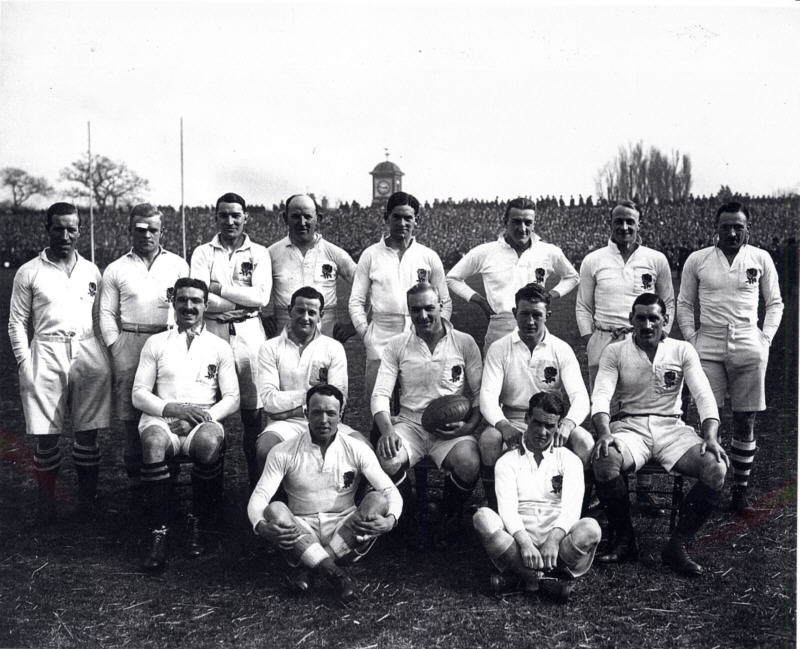
Photo shows Bradford RFU star Eddie Myers with the England team for the Scotland fixture in 1924. Eddie is seated middle row 2nd left..

engvscot1924a

The forthcoming books ROOM AT THE TOP and LIFE AT THE TOP by John Dewhirst tell the story of the origins of Bradford FC, the circumstances leading to the split in English rugby, the conversion of the Bradford clubs to soccer and the background to rugby union and league in Bradford at the start of the last century.

MYTHS & REALITY: A FRESH LOOK AT BRADFORD FOOTBALL HISTORY

By John Dewhirst

Most football histories are written as chronologies of events and include considerable statistical content. So far as Bradford football is concerned we have a reasonable understanding of what has happened since 1903 but not about why it happened. As regards the nineteenth century, there has been limited understanding of what happened and even less about why. Similarly, a credible explanation of the antagonism between City and Park Avenue has never been provided.

A new series of books – HISTORY REVISITED – is being produced that will provide a fresh perspective on the history of Bradford football going back to its genesis in the nineteenth century.

The first volume,  A HISTORY OF BCAFC IN OBJECTS by John Dewhirst was published last year and provided an original version of the club’s history through surviving artefacts and memorabilia, a ‘museum in a book’. It was acclaimed by Hunter Davies as ‘the best illustrated history of any club I have ever read’.

The second volume, REINVENTING BCAFC by Jason McKeown will be published in March, 2016. This will cover the last thirty years from the re-opening of Valley Parade to the present day.

The story of the origins of sport in Bradford and the rivalry of Manningham FC and Bradford FC as well as their later conversion to soccer will be told in the third and fourth volumes of the series, ROOM AT THE TOP and LIFE AT THE TOP by John Dewhirst to be published  in July, 2016. These will feature the nineteenth century origins of rugby and association football in Bradford and the rivalry of the Valley Parade and Park Avenue clubs up to 1908.

The fifth, and final volume, WOOL CITY RIVALS by John Dewhirst will be published during 2018 and will cover the twentieth century rivalry of City / Park Avenue from 1908 to 1974  and will include many items of memorabilia from both clubs that it was not possible to include in A HISTORY OF BCAFC IN OBJECTS.

Between them the five volumes will tell the story of football in Bradford from its genesis to the modern day and the series is intended to provide a definitive history. There will be subscriber and limited edition hard back issues of each

To join the mailing list please contact glorious1911 at paraders dot co dot uk and follow Tweets from  @jasonmckeown @thewidthofapost @woolcityrivals and @jpdewhirst

=======================================================================

Details about the BANTAMSPAST HISTORY REVISITED BOOKS

=======================================================================

See the feature in the latest issues of the Bradford and Saltaire Reviews…

http://issuu.com/festivalpublications/docs/bradford_review_october_issuu/c/sc9iwp2

“A DECADE TO FORGET”?: FOOTBALL IN BRADFORD DURING THE 1950s.

By Dave Welbourne

The front page of the Telegraph and Argus on March 20th., 1950 announced that Bradford City and Bradford Park Avenue were in “the doldrums”. (1) The crisis continued throughout the 1950s, and led some to claim it was “a decade to forget”. Why had Bradford football descended into this?


In the early fifties I was a Bradford Park Avenue supporter watching the likes of Downie, Horsman, Suddards, Deplidge, Crosbie and Haines. By the end of the decade I had been converted to Bradford City. Players from that era still run off my tongue: Smith, Flocket, Mulholland, Lawlor, Robb, Stokes, Reid, the Jackson twins, McCole, Webb, etc. It was a period of contrasts and transitions as the country underwent post-war reconstruction. Professional football too was to undergo significant change, but the two Bradford clubs were to have rock bottom experiences.


For me, it all began when my dad took me to watch Bradford Park Avenue, captained by his friend, Les Horsman , who was from Burley where we lived. We caught the bus to Bradford’s Chester St. bus station, then joined the crowds walking up to Great Horton on what seemed like an endless trek. It was strange how people seemed to accelerate the nearer they got to the ‘Doll’s House’ style Archibald Leitch stand which was similar to Fulham’s Craven Cottage. Supporters came by train, tram, car and foot. Opposite the ground was Horton Park Station, but this closed down in 1952, though it was used later for big events.


The Bradford familiar to football supporters retained many of its Victorian features. In the nineteenth century the area around what became the Park Avenue ground was green fields, and Little Horton had an abundance of large Victorian houses. For the middle classes it had a prestigious image. In contrast, as the century progressed, Bowling, Great Horton, and Manchester Road were lined with rows of back to back textile workers houses, mills, factories, warehouses and tall chimneys. (2) To escape these crowded, polluted urban areas, the middle classes had generally moved out.


Immigrants then spilled into these working class suburbs. The Irish fleeing the Famine in the 1840s and later refugees from Eastern Europe, made their homes in Bradford. Nazi and Soviet persecution in the thirties and forties led to an influx of Poles, Ukranians, Hungarians, and Lithuanians. To fill the demands in the post-war labour market, migrants from the West Indies and South Asia worked in the textile and public transport industries. Initially they were young men who wanted to earn money then return home. However, many settled in Bradford permanently, later sending for their wives and families . In 1953 there were 350 Asian migrants in Bradford. By the 1961 Census there were 5000 from the Indian subcontinent living and working in the city. Little Horton with its large Victorian houses, accommodated many new arrivals. On the other side of the city, Manningham Lane, close to Valley Parade, had also been an area of substantial middle class housing, and was experiencing a similar transition. (3) At Manningham Mills, which had been the largest silk factory in the world, Samuel Cunliffe-Lister had employed 11000 workers in its prime. During World War 2 it had produced parachutes and khaki uniforms. Rows of working class houses had been built in its vicinity. Many Bradford City fans came from this area but by the 1950s supporters of both clubs were coming from all over the city and beyond.


It was still the age of steam railways, mills powered by coal, back to back terraced houses with outside toilets and no bathrooms with hot running water, public baths and wash houses, gas lamps, smog, horse drawn vehicles, whole communities employed in the same industries, poverty and poor health. Children still played in the streets. It was a common sight to see groups of them playing football using coats for goalposts, with the street lights enabling the first floodlight matches to take place as night descended. Many attended schools which had been established after 1870 thanks to the pioneering work of W. E. Forster, the Bradford M.P., and mill owner in Burley-in-Wharfedale. Teaching methods were very similar with an emphasis on the 3 Rs, rote learning, and the chanting of tables. Bradford has a proud history. (4) It had associations with liberalism and radicalism, through Chartism, and trade unionism. Following a strike in 1890-91 at Lister’s Mill, Manningham, the Independent Labour Party (the fore-runner of the modern Labour Party) was established in Bradford. It produced pioneers such as factory owners like John Wood and Titus Salt, and education reformers like W.E. Forster and Margaret McMillan. It was the birthplace of creative geniuses such as the writer J.B. Priestley and the composer, Delius.


Post-war Britain was undergoing profound economic and social changes. Austerity was giving way to affluence. So much so that the Prime Minister in 1957, Harold McMillan, claimed : “You’ve never had it so good”. The National Health Service with free medical care had been established in 1948. The Clean Air Act of 1956 tackled the long standing problem of air pollution (‘smog’) which in cities such as Bradford had been damaging people’s health. It had been one of the campaigns of Titus Salt over a century earlier and had forced him to move his factory and workers to the ‘model town’ of Saltaire.(5) The Housing Act of 1957 inspired the demolition of slum housing and the crumbling, sub-standard and unhealthy Victorian terraces. In their place, deprivation had been replaced by new housing estates and blocks of flats providing indoor bathrooms, modern kitchens and heating. In Bradford, the Ravenscliffe, Canterbury Ave., and Swaine House estates were considered ‘paradise’. Many heralded this ‘new world’ but gradually people began to moan that the old vitality and community spirit had been destroyed. Dissenting voices claimed that the Victorian heart of Bradford had been ripped out. Interesting buildings had been sacrificed on the altar of modernity. Kirkgate Market, Swan Arcade and the Mechanics Institute were demolished. To some, Victorian architecture had seemed ugly but the replacement Portland stone soon weathered into a drab grey. It had become a ‘material world’ of consumerism. By the late fifties, television sets, washing machines, cookers, and increased leisure time, including paid holidays, made life better. The modern teenagers with money in their pockets were following the latest trends in fashion, and expressing themselves through rock ’n’ roll. It was still claimed that people could go out and leave their doors unlocked and that there was no fear for children’s safety. Society was still basically safe and caring, and young football fans could feel protected by adults.


Bradford Park Avenue’s ground seemed crowded and bustling. At the beginning and end of the football season, there was usually a cricket match going on next to the football ground. In 1953, Yorkshire played the visiting Australians there. Crowds would gather prior to kick off, at half time and after the final whistle, to take in a few overs. My dad and I would join them until it was time to meet Les Horsman outside the dressing rooms with our complimentary tickets. He once took us into the changing room. My eyes filled up, not from the excitement of meeting the players, but because of the mixture of liniment and cigarette smoke in the atmosphere. Some players smoked before the game. Bill Deplidge sat me on the massage table, and passed round my new autograph book. It all seemed like a friendly, happy atmosphere, but how could a five year old know anything about the tensions and politics of a professional football club? Whatever the team talk was, I never found out because we had to leave to take our seats in the main stand.


The scene outside appeared cold and grey. Clothing was not colourful. There may have been the odd black, amber and red scarf, and a football rattle, but very little else among the tightly packed, predominantly male spectators, many of whom wore flat caps. Little lads were often lifted over the turn-styles, and admitted free. The smog from generations of industrial pollution which seemed to hang above the valley, and blacken the nearby houses, was increased by the cigarette/pipe smoking crowd. I remember being impressed by the architecture of the football ground. Later on in the fifties when I was going down to Valley Parade, I was more impressed by the Bradford trolley buses, and Busby’s store, and felt the ground was not a patch on Avenue’s. The histories of the two clubs and their geographical locations had contributed to local rivalry.(6) It is still there to some degree. Recently I was talking to a veteran Bradford Park Avenue fan, who even after the club’s demise from the Football League in 1970, refused to ‘jump ship’ and switch allegiance to what he still called ‘the Manningham club’ down at ‘Wally Parade’, even during their brief flirtation with the Premier League. It may have been jealousy, but more likely good old fashioned loyalty. In the early fifties the impression was that Avenue fans felt superior because they had more success before the War, and they considered the area in which the club was situated ‘better’ than City’s Manningham Lane. By the late fifties with City in Division 3 and Avenue in the 4th Division, City supporters felt superior.


As a child brought up in the then mill village of Burley, my main passion in life was football. We didn’t have a television, even after the Queen’s Coronation of 1953 had given a boost to this new entertainment. The wireless in the corner of the room, sent out programmes from the BBC. ‘Listen With Mother’ at 1.45 pm, was the children’s favourite which was supposed to precede an afternoon nap when my mum could listen to ‘Woman’s Hour’. ‘Housewives Choice’ and ‘Music While You Work’ would accompany the housework, and at dinner time ‘Workers’ Playtime’, live from a factory somewhere in Britain, was popular, along with comedies such as ‘The Clithero Kid’, and ‘Educating Archie’ (which was remarkable because it featured a ventriloquist, Peter Brough with his dummy, Archie Andrews, on the radio!), and ‘The Goon Show’. There were plenty of variety shows such as ‘Have a Go’ with the Halifax presenter Wilfred Pickles, and ‘Billy Cotton’s Band Show’. On an evening, there were ‘scary programmes’ for adults such as ‘Dick Barton’ and ‘Journey into Space’. ‘Children’s Favourites’, was popular on a weekend, as was ‘Two Way Family Favourites’ on Sundays, fondly accompanied by the smell of roast beef and Yorkshire Pudding.


A special programme on Saturdays was ‘Sports Report’ presented by Raymond Glendenning until 1955, then Eamon Andrews. The theme tune ‘Out of the Blue’ probably brought most of the nation to a standstill at 5 o’clock, as the football results were read out. My dad would check his pools coupon hoping the treble chance would come up, and then we would be rich. Every week was the same: we didn’t become rich. I was then sent up the street to get ‘the Pink’, the Telegraph and Argus sport’s paper. After sweet rationing ended in 1952, I bought sweets for the family. I held them tightly in one hand and the pink rolled up in the other, and ran through the dark street whistling, which I thought was a way of warning off any potential Pink or sweet thief. Once home, my dad could read the football reports while me and my brother, Michael, shared the sweets with my mum.


I was captain of Burley Junior School’s football team in 1957. We played at the Rec on a full size pitch which meant it was difficult to reach the goal mouth from a corner kick. I later played for Burley Trojans on the same pitch which by then didn’t seem as dauntingly large. But the lasting memory was that the football, in the depth of winter, was like a soggy, heavy, medicine ball sticking in the churned up pitch. By summer it had turned suedey and misshapen, making it difficult to judge the bounce. But what was worst was constantly heading the soggy thing, especially the lace side. Our football boots were clumsy and brown. I would leave them a few days after a match for the mud to dry, then scrape them with a knife before dubbin them lovingly by hand. I often had to cut the laces off because it was impossible to undo the knots. I would purchase new, white, 72 inch long ones from Beever’s shoe shop at the end of Station Road, along with any replacement studs which my dad had shown me how to nail onto the soles using a hammer and last. When I bought my first pair of Pumas in 1965, football was suddenly transformed into a different game.


During the 1950s football heroes were local players, or Roy of the Rovers in the Tiger comic. (7) We were not subjected to television coverage and media hype, and we followed our local team not some top successful club supported from an armchair. My hero was Les Horsman who not only played for Bradford Park Avenue, but in summer captained Idle cricket team in the Bradford League. He played 239 games between 1946 and 1953, scoring 12 goals before being transferred to Halifax Town with whom he played 120 times and scored 8 goals. This meant my dad and I started watching Town for a bit. I detested the long journey which included changing buses to Halifax. The Hebble bus always seemed crowded and hot, and I was inevitably pressed up against the round heater at the front so an elderly man, or woman, could sit down. It’s a wonder I never passed out. We would meet Les at the Shay before the match.


I particularly remember a game against Hull City for whom Stan Mortenson was playing after his Blackpool and England days, and his outstanding performance in the 1953 F.A. Cup Final. After retiring from professional football in 1957, Les had a paper shop at the end of Iron Row in Burley, and I delivered papers for him. I would sometimes go into his living room at the back of the shop where I used to stare at his trophy cabinet containing medals and cups from his football and cricket careers. I would dream of being a footballer but advice from Les changed my life. He told me that he had always loved playing football but he didn’t make much money, and without qualifications or a trade, he supported his family by running a shop. He suggested that I should use my educational opportunities and interest in sport to train as a PE teacher.


I did take his advice and became a teacher, not PE but History, though I did coach school football teams. I continued to play football as an ‘amateur’ for fun. Conversations with him revealed there was a different side to a footballer’s life, especially in the lower divisions, that was not so glamorous.


The former Bradford Park Avenue player, Len Shackleton, who went on to play for Sunderland and England, wrote a controversial autobiography, ‘Clown Prince of Soccer’, which reflected on what it was like to be a professional footballer in the 1950s. Avenue fans still raved about Shacks who had been transferred to Newcastle for £13000 in 1947, the year I was born. He scored six goals on his debut against Newport County. Les Horsman had played alongside him and once told me he was dazzled by his skills. Len was transferred to Sunderland in 1948 for £20,050, which was a record fee at the time. Colin Bell, the great Manchester City and England midfielder, once described him as “a magician with the ball – – – who could make opponents look foolish with his tantalising tricks.” (8) Other professionals, such as Stan Mortenson and Tommy Docherty, and journalists, gave him high praise, but he was not in favour with ‘the establishment’. This is why, despite his outstanding ability, he played only five times for England. He was born and bred in Bradford into a working class family who supported Bradford City. He attended Carlton High School and was capped for England Schoolboys. At fifteen he signed as an amateur with Avenue, but then had a spell with Arsenal before World War 2, failing to make the grade. He returned to Avenue and signed professionally in 1939. On Christmas Day, 1940 he played for Bradford Park Avenue against Leeds in the morning, at Elland Road, and guested for Bradford City at Huddersfield in the afternoon. He was always forthright, and criticised the professional game.


This Bradford lad published his critical autobiography in 1955.(9) In it we get some idea of what was wrong with English football. Chapter 9, entitled ‘The Average Director’s Knowledge of Football’, was deliberately left blank in accordance with Shackleton’s wishes. He believed directors treated professional players like serfs or slaves. His views were largely based on his experiences at Avenue and Newcastle, supported by fellow professional’s opinions.
He claimed he was barracked by a section of Avenue supporters. “Invariably when a player holds the ball in an effort to do something intelligent with it – rather than passing the buck to a team mate –he comes in for advice from the knowledgeable ones on the terraces. Ball players – – must expect to antagonise the ‘get rid of it’ faction while trying to inject fresh ideas into the bloodstream of modern mass-production soccer.’ This treatment influenced his decision to leave Park Avenue. Stanley Matthews commenting on the transfer to Newcastle, argued it was “another proof of the harm unsporting spectators can do to players and clubs.”


Players’ futures were in the hands of directors and some were deliberately obstructive when it came to transfers. He was critical of the running of the Park Avenue club. He was not consulted about moving to Newcastle until the deal was done. Avenue, and City, sold players with great potential, to balance the books. Derek Kevan who also became an England international with West Brom, Billy Elliott, another international who went to Sunderland, and Ron Greenwood a future West Ham and England manager, were sold for financial reasons, and this policy continued throughout the fifties. Bradford City sold Derek Hawksworth, John McCole and Derek Stokes much to the anger of the City supporters. The selling of talent affected the success of the Bradford clubs. (10)


Shackleton’s fresh start with what he considered a great club could have established him at Newcastle for the rest of his career, if the club had been run more efficiently. Consequently, he left for rivals, Sunderland, in 1948, where he became a hero.


Shackleton was scathing about the professional footballers’ contracts which he said were one-sided. Questions were even asked in the House of Commons amidst public indignation. He urged other players to speak out against it as they were no better than professional puppets dancing to directors’ tunes. Football was still largely a working class sport, and professional footballers’ wages were not that much more than a working man’s. There was a maximum wage. In 1951 it was £14 a week which was raised to £15 in 1953, £17 in 1957, and £20 in 1958. By 1960 the gap between a footballer’s wage and an industrial worker’s wage was £5. Shackleton was critical of this wage structure.


He wrote that a footballer appears to have “a pretty good life with a possible £15 a week wage”, but many are the victims of the whims of directors, who could evict them from a ‘club house’ when they dispensed with their services, and the pretty good life was over before the age of forty, providing it was not curtailed prematurely through injury. The average playing life was seven years, and the average retirement age was 35, so that in the prime of life he could be jobless, and homeless with no training or qualification for a trade or profession. Few of them made it into management or coaching so it could be a depressing end to a career for the player and his family with no security. When they signed for a professional League club they were tied for life or until the contract was terminated without notice by the manager or directors.


Shackleton claimed that no other civil employment placed such restrictions on the movement of individuals, while retaining the power to dismiss them. They did not have the freedom to better themselves. Tom Finney, the Preston and England winger, was told that he would be a rich man for life if he spent five years playing in Italy, but Preston would not dream of allowing him to go. He supplemented his income during his playing days by establishing a plumbing business. Wilf Mannion, the Middlesbrough international, was offered a contract with Juventus who were prepared to put £15,000 into his bank account, but Middlesbrough stood in his way. He also claimed he had been approached by a Turkish club, and could have earned much more than he could have dreamed of in English football. Some players such as John Charles successfully escaped as he did when he left Leeds United for Juventus. He was very popular over there, a popularity which continued for the rest of his life, and he enjoyed a lifestyle unthinkable in England at the time. In 1960 a campaign led by Jimmy Hill, President of the Professional Footballers Association, threatened strike action if the maximum wage was not abolished. This was accomplished in 1961 and in time, players could negotiate new improved wage levels. Some had been arguing they were like entertainers playing in front of large crowds and deserved a fair share of the income. Johnny Haynes of Fulham and England became the first £100 a week footballer.


Professional footballers at all levels loved the game. Billy Wright, the Wolves and England captain, claimed he would have played for England for nothing, the England cap was enough. Nat Lofthouse the Bolton and England centre forward, regarded it a pleasure to play. Talking to former players it was obvious that football gave them a passion throughout life. Jeff Nundy signed for Huddersfield Town as a part-time professional for £4 a week, but he was not retained when Bill Shankly took over. He went to Bradford City, managed by Peter Jackson during the 1955-6 season, and eventually turned full-time. His basic weekly wage was £11 with a bonus of £2 for a win, and £1 for a draw. He had been an apprentice engineer, and some players, like Bobby Webb, remained part-time because they were better off. A part-timer trained Tuesday and Thursday evening.


Some players in the 1950s increased their incomes through commercial ventures. Denis Compton of Arsenal and England, was known as ‘the Brylcreem Boy’ because he advertised the product. He was a cavalier figure who was one of the few sportsmen to become a double international when he played for England at football and cricket. He was a working class hero who earned a reputation as a playboy. He could have fallen foul of the Establishment but was likeable and talented, so he got away with it. He played in the FA Cup winning Arsenal team of 1950, alongside his brother Leslie, who also played cricket with him for Middlesex. In the Liverpool team that day was the Gloucestershire county cricketer, Phil Taylor. Incidentally, Denis was so exhausted in the final that at half time he had to be revived with a glass of brandy.(11) He had to retire from football because of a knee injury, but continued to play cricket.


Stanley Matthews endorsed a new style of football boots, and Craven ‘A’ cigarettes. He was criticised for promoting cigarettes at a time when scientists were establishing a link between smoking and lung cancer. For local Bradford footballers there were few commercial opportunities. For many players life after football meant running a pub or shop, or gaining employment in a local factory. Some, however successful as a player, struggled financially.
During the seventies I helped organise a testimonial match and wrote the programme notes for the legendry England centre forward, Tommy Lawton, who retired in the 1950s. He had fallen on hard times. He was highly respected by fellow professionals. It was a privilege to meet and chat with such a fine gentleman but sad to see how his life had turned out. He was proud to have played with outstanding players, and paid for it too. He felt he was lucky as many supporters were not well off and some were unemployed. He had to dress correctly, and not let the club down. Accommodation was provided for some, and a free lunch after training.


Players took a cut if they were dropped or injured. In summer wages were lower; in 1953 it was £5. It was possible for footballers to play cricket because the season was shorter than it is today. Les Horsman captained the successful Idle cricket team in the Bradford League. My dad took me to see him play. On one occasion he was out for a duck. As he came off his excuse was that he had a hole in his bat. He was such a hero to me that I believed him. Ken Taylor the Huddersfield Town player who finished his career with Avenue played for Yorkshire and England. Willie Watson, was a left handed batsman for Yorkshire and England in the fifties, and a cultured wing half, starting with Huddersfield before the War, and Sunderland and England during the fifties. He finished his career with Halifax Town in 1956 as player-manager. He managed Town between 1964 and 1966, before moving to Bradford City from 1966 to 1968. (12)


The English game had been criticised for being too insular and aloof. It was the birth-place of soccer and was responsible for spreading it throughout the world. (13) But England refused to participate in the World Cup when it was established in 1930, and English clubs were discouraged from playing foreign teams. There were disagreements between the Football Association and the Football League. The attitude seemed to be that we had nothing to learn from others, but during the 1950s the face of football began to change.


England entered the World Cup for the first time in 1950, though unsuccessfully, and it became obvious that we could learn from others. The Football League did remain the leading example of the domestic game in the world, but in the ‘rock ‘n’ roll’ years of the later fifties, foreign influence was to have a profound effect on English football not only at international level but throughout the four divisions of the Football League. How far it reached out to Bradford is open to question.


Bradford City did play in France in 1951 against Mazamet to mark the wool town’s Centenary and won 2-1. In 1954 they went on a pre-season tour of Holland. In the 1955-6 season the European Cup was introduced with Real Madrid the winners. By now European football was on the rise with Spain and Italy showing the way. The World Cup in 1958 brought Pele and Brazil to the fore front. Hungary’s arrival in England in 1953 emphasised how outdated had become the tactics and training methods in English football. England were thumped 6-3 and lessons had to be learned. It was the first time England had been beaten at home.


On the Continent ball control was taken more seriously and emphasised from a very young age. Mastery of the ball helped to boost a player’s self confidence and belief in his ability. It allowed more options on the field so that tactically teams could be more effective. Shackleton held this opinion in his book, and others urged changes in coaching methods. Coaches and managers needed to be of a higher calibre and have the ability to implement new ideas.


I remember going down to watch City train at Valley Parade in 1958. Training seemed to consist of running down the pitch and up and down the terracing. I never saw a ball produced all the time I was there. This childhood memory has been confirmed by former City players. It was believed that if they were starved of the ball during the week, they would be hungry on match days. So ‘continental ideas’ didn’t appear to have travelled down to Valley Parade, and practicing ball skills seemed to be off the agenda, which may have inhibited success. However, the physical training made them one of the fittest sides in the League.


Leaning on a brush, having a break from sweeping the Kop was a young apprentice. He was friendly and I got talking to him. He said he wanted to be training ‘down there’ and playing in the first team. This young lad turned out to be Trevor Hockey who became a favourite and a Welsh international. He was from Keighley playing amateur football when City spotted him. He made his debut during the 1959-60 season and was then sold to Nottingham Forest during the 1961-2 season. He had a nomadic career playing for Newcastle, Sheffield United, Birmingham, Aston Villa and Norwich. He made almost 600 appearances, but tragically died at the age of 43.


Jeff Suddards was a local hero at Bradford Park Avenue. He attended Tyersal School, and signed in 1950. During the fifties, Avenue had seven managers which didn’t help to develop continuity and consistency, and could have contributed to lack of success. Suddards played under all of them. He claimed that the club went downhill when “they got directors who were small men with little knowledge of the game, and they would not pay for players of the quality we needed.” He had similar views to Shackleton about the importance of ball skills. (8) “The trouble at Avenue was we had players who couldn’t control the ball properly and because of the wage system which meant your money was halved if you were dropped into the reserves, there were some who would ‘hide’ rather than risk injury. Some continued to play despite injury.

There was little in the way of medical treatment at the club. In the late fifties, a heat lamp was purchased at Valley Parade to treat muscle injuries. Key players’ careers were terminated, some prematurely, due to injuries which today would be repaired.


Ron Greenwood, writing in his autobiography, (15) revealed that at Avenue, the manager, Fred Emery, only saw players before matches. No one talked tactics and they had to work things out as the game progressed. Jeff Nundy who played for City from 1955 to 1961 said it was the same at Valley Parade. He recalled that before games, the trainer, Jock Robertson, would come round with a bottle of whisky which the players sniffed and rubbed their lips around the bottleneck. The game was basically simpler than it is today with each player knowing what their role was. Players such as Reid, Stokes and Robb had flare, and the idea was to get the ball forward as quickly as possible. John McCole was a very confident, prolific goal scoring centre forward, and if he missed a chance, he just shrugged it off, believing he would score next time. Having confidence is important in achieving success, and lack of confidence in a footballer shows up on the pitch. Here coaches and managers play a key role, but this seemed to be absent at both Bradford clubs. Good players who shone in the reserves, like Jeff Nundy, found it difficult to make the transition into the first team. Allan Devanney told me a few days before he tragically died in Otley, that he had a similar experience at City, especially when he replaced Derek Stokes, the fans’ favourite. The pressure affected his nerves and performance, and ended his career.


The post-war period up to 1958 in some ways was ‘a golden age’ for smaller clubs, but the Bradford teams were often haunted by financial problems. Ivor Powell was appointed City’s player-manager in 1952 with the brief that he had to cut expenses to the bone. He reduced wages by 40% and travel costs by 15% in one season. A public appeal was launched in the same year to raise £20000 for new players, but this was unsuccessful. One of the first to be signed was Brian Close the Yorkshire and England cricketer, who played nine games before injury ended his football career. Players continued to be sold and the income went towards ground improvements. Directors were local businessmen who were reluctant to put their hands in their pockets. The Midland Road stand at Valley Parade was considered unsafe back in 1949. It was cut into the slope of the hillside and its foundations were unstable. It was sold to Berwick Rangers for £450, and a new stand was opened in 1954. (16)


But alas, this was soon considered unsafe and demolished in 1960. In 1954 floodlights were installed on telegraph poles along each side of the ground.


Avenue’s floodlights were switched on in October 1961 for a game against the Czech national side. They were on 95 foot high pylons but were brought down in gale force winds the following February. Floodlit football allowed mid-week games, and saw the introduction of the white ball. But results were mediocre, and Powell was sacked in 1955 with City in the bottom four. Peter Jackson was appointed, and he was told to develop home grown talent. The club had a policy of not signing anybody over the age of thirty, and in 1956 had the youngest team in Third Division North. The wage bill was also the lowest since 1948. They finished the 1957-8 season in third place. It was rumoured that the directors were worried they might achieve promotion and this would increase financial costs in Division 2. They didn’t achieve promotion, but they qualified for the new Third Division after the Football League decided on restructuring by creating the Third and Fourth Divisions. Avenue finished in the bottom half and so were relegated into Division 4. (17)


In the early fifties, Stanley Waddilove was Avenue’s Chairman. For him the club was his hobby but he was reluctant to invest. He was a dominant figure who was quick to criticise. He insisted that unless crowds improved, players would continue to be transferred. (Bradford Telegraph and Argus, December 1st, 1949.) (18) Lack of success was repeatedly blamed on selling the best players. By 1955 Avenue’s finances were even worse with debts of £35000. Waddilove insisted that the directors would decide which players were to be transferred or bought. This interference was cited as a reason why Bill Shankly was not appointed as the new manager; he was not prepared to accept board control over team matters. (6) In 1955 the financial situation grew worse.


Manager Kirkman was sacked, and Waddilove resigned. Reginald Kellett took over management on a temporary basis for the 1955-6 season and it was his ceaseless efforts and youth policy which prevented the club going out of business, according to the Telegraph and Argus (Feb. 3rd., 1960.) (19)


By 1957-8, the post-war soccer boom was over. The decline in attendances was around 20% compared with the peak of 1948-9. Though City’s crowds were slightly higher, both clubs were suffering due to performances on the pitch, and significant social changes which were highlighted in the News Chronicle Survey into ‘The State of the Game in 1959-60’. (20) Many believed television was keeping people away from football matches. Sir Stanley Rous, secretary of the Football Association, noted that television was a factor but also added the availability of hire purchase and competition from other sports. The game needed better facilities, more input at youth level, and the restructuring of league and cup competitions. In some parts of the country there had been a decline in junior leagues. The Bradford Red Triangle went down from 28 to 12 clubs. The game had to be remarketed to appeal to spectators. The News Chronicle claimed young people turned away from football because they had other interests. “This is the money to burn generation, and that money is not being spent on football”. Instead it was bringing “wealth to the gramophone-record industry” and “the manufacturers of exotic suits and shoes”, and motor bikes. (News Chronicle, 10 February, 1960). (21) The Secretary of the Bradford Red Triangle League argued that teenagers were more interested in rock ‘n’ roll, not football. It was difficult to attract players and they wanted everything laid on. Another factor that needed addressing was the decline of playing fields due to the house building boom.


Social changes were to weaken local identifications and loyalties. Whereas the increase in the number of motor cars enabled fans to travel to more away games, they also allowed them the option of watching other teams such as Burnley, Huddersfield Town and Leeds United, playing in higher divisions against more attractive opposition.


It was the considered opinion that the Avenue had a better ground in a better location. In comparison Valley Parade was shabby. Discussions about merging had taken place during the fifties but to no avail, inhibited largely by ‘tribal rivalry’ and historical loyalties. Derby games between City and Avenue continued to be the highlights, with City generally having the upper hand. There were sixteen derbies during the fifties with City winning six and Avenue five. They came to an end when Avenue were relegated to the 4th. Division in 1958. Before that gates up to 20000 could be expected. (22) There was a tremendous atmosphere and intensity, though no hooliganism in non-segregated crowds. There was much more rivalry between the fans rather than the players, though ‘derbies’ were very competitive, with players challenging harder for the ball, and passing comments to each other. After all, there was pride at stake, and the honour of being ‘top dog’, until the next encounter.


It was customary for spectators from both teams to mix together on the terraces, though there was the practice of fans swapping ends so they could be behind the goal their team was attacking. For the FA Cup match against Everton in the third round, 1959-60, which City won, 3-0, with goals from David Jackson, Reid and Stokes, I was packed in the Bradford End in a crowd of 23550. I was intrigued by the Scouser accent and sense of humour. When they started urinating on the terraces, I thought this is what it must be like in the First Division. Mind you, the toilet provision at Valley Parade was very primitive. Before 1985, there was only one female toilet in the entire ground.
At half time a local brass band, often Hammonds Sauce Band, would entertain the crowd. Tunes by Sousa were popular including ‘Liberty Bell’ which later became associated with Monty Python.


The players’ changing rooms were also diabolical. They were situated in the end house on Burlington Terrace and were over crowded and cold with water all over the floor. The players ran out through a tunnel by the corner of the Kop. It was dingy and slippery and infested with cockroaches. The teams came out gingerly so as not to go over on their ankles. Jeff Nundy remembers that the kit was immaculately set out and neatly ironed. After the game their boots were hosed down and left to dry for the next time they came in for training. A number of players didn’t have cars and mingled with the supporters as they walked down Manningham Lane. Jeff Nundy had to catch two buses. I remember waiting for the Ilkley bus after a game and seeing Jim Lawlor standing at the Keighley bus stop. I met Jim and Tom Hallett at a Bantam’s Museum function and they agreed it was a far cry from the experiences of today’s players. Jeff Suddards recalled when he started playing for the Avenue in 1950, they would meet up before the game at the Victoria Hotel for a few games of snooker and lunch of chicken and toast before being taken to the ground in taxis which slowly weaved their way through the crowds walking up from town. Park Avenue was a beautiful ground to play on and the facilities were better than City’s, and the crowds liked to go there. Teams tended to travel to away games on the same day, unless it was a very long journey such as Bournemouth, and Plymouth when they would stay in a hotel. The City team would meet at the ground, and on the way they stopped for a light lunch which Jeff Nundy remembered was usually egg on toast. There was a good team spirit. Some players played cards on the coach or just chatted. John McCole and Bobby Webb were jokers and George Mulholland had a dry sense of humour, so there was plenty of fun.


After training some City players went for a game of snooker, others went to a café in Bradford Market for lunch. But despite good team spirit successive teams failed to produce the results which would bring promotion. A winning team attracts bigger crowds, and puts the club on a stronger financial footing.


Success in the FA Cup,1959-60, created a feeling of optimism that City were at last on the road to success. After disposing of Everton in the third round they went on in the fifth to face Burnley who became First Division Champions at the end of the season. The all-ticket crowd of 26227 got behind the team, and despite City leading through Webb and Stokes, two late goals by Burnley, who found it difficult to play their short passing game on the Valley Parade mud, led to a replay at Turf Moor in front of around 53000 people. (23)I was in that crowd with my dad and Les Horsman, and despite being lifted down to the front, I don’t remember seeing much. I do remember the disappointment at losing 5-0, and going down with flu a few days later. The cup run brought in much valuable income, but this was not spent on players.


The directors spent £14000 on second hand floodlights from West Ham in March 1960, then work started on covering and improving the Bradford End, giving it a capacity of 3500. New club rooms, offices and changing rooms were provided. But star players continued to be sold. McCole went to Leeds, Stokes to Huddersfield and Hockey to Nottingham Forest. So the anticipated success at the end of the fifties turned to despair. The following season City were relegated.


The fortunes of both Bradford clubs had been on the wane throughout the fifties.(24) In 1949 City had finished bottom of Division Three North and had to apply for re-election. The directors embarrassingly had to write to the other clubs for support. Avenue had to seek re-election in 1956. In fact from the 1949-50 season to 1957-8, a Bradford club finished in the bottom five of Division 3 North on five occasions.(19) In 1950-51, Avenue’s average home gates were 12300, and City’s 12500. By the end of the 1959-60 season Avenue’s crowds had plummeted to 6500, though City faired better with 10200. There was still the loyal core of fans but this was diminishing.
Disillusionment and cynicism were creeping in.


So why were the fifties ‘a decade to forget’? Blame has been heaped on directors and management for their lack of ambition and abilities. The clubs had players with flare but they were usually sold to solve financial problems.
This hand to mouth existence made forward planning and establishing a strong squad very difficult. The structure of players wages and conditions affected the professional game, and particularly lower clubs like City and Avenue. Injuries and low confidence, despite what appeared to be a good team spirit, seemed to hinder success. Training methods and lack of tactics kept them in the doldrums. Though some critics believed the two clubs should have pooled their resources and merged, a city the size of Bradford should have been able to sustain two football league teams. The potential support was there as history proved, but perhaps the cultural, social and economic changes during the fifties were inhibiting positive development. Failure on the pitch put both clubs on the slippery slope. (25)


Throughout the country virtually every city and town had a football league club which meant something to the community. Bradford was no exception.


Several clubs struggled on and off the pitch in the fifties, and they too may have considered it ‘a decade to forget’. However, there is more to football than football. In the fifties football was still a working class sport, played and watched largely by the working classes. Nowhere else in the world would you find such interest and attendances at the lower level, and this helps to make English football ‘a rich game’. It is not ‘a decade to forget’ if it is the decade when you begin to watch your local team. This can not be erased from the heart and mind. It lays the foundation for a life-long passion, treasured in the programmes, autographs, photographs, and newspaper cuttings from that time. (26) It ignites a flame which gives hope that though there might be disappointments and sorrow ahead, there will also be joy and success.


References.
1. Telegraph and Argus March 20th, 1950.
2. Richardson, C, A Geography of Bradford, University of Bradford, 1976.
3. Sheeran, G. The Buildings of Bradford: An Illustrated Architectural History, Tempus, 2005.
4. Firth, G, A History of Bradford, Phillemore, 1997.
5. Reynolds, J. The Great Paternalist: Titus Salt and the Growth of 19th Century Bradford, Maurice- Temple Smith, 1983.
6. Hartley, M and Clapham, T., The Avenue: A Pictorial History and Record of Bradford Park Avenue AFC, Temple Nostalgia Press, 1987.
7. Riches, A., Football’s Comic Book Heroes, Mainstream, 2004.
8. Harvey, M., and Clapham, T. All About Avenue: The Definitive Bradford Park Avenue AFC, Tony Brown, 2004.
9. Shackleton, L., Clown Prince of Soccer, Nicholas Kay, 1955.
10. Markham, D. and Sutton, L., The Bradford City Story: The Pain and the Glory, Breedon, 2006.
11. Lloyd, G. and Holt, N., The FA Cup: The Complete Story, Aurum, 2005.
12. Watson, W., Double International, Stanley Paul, 1956.
13. Walvin, J., The People’s Game, Mainstream Publishing, 1994.
14. Butler, B., The Football League: The Official Illustrated History, Blitz Editions, 1993.
15. Greenwood, R., Yours Sincerely, CollinsWillow, 1984.
16. Pendleton, D. and Dewhirst, J., Along the Midland Road, Bradford City AFC, 1997.
17. Gillan, D.R., Dewhirst, J., Clapham, T., and Mellor, K., Of Boars and Bantams: A Pictorial History and Club Record of Bradford City AFC, Temple Publishing, 1988.
18. Telegraph and Argus, Dec. 1st., 1949.
19. Telegraph and Argus, Feb. 3rd., 1960.
20. Nannstad, I., The State of the Game, 1959-60: News Chronicle Survey, Soccer History, 32, 2014.
21. News Chronicle Feb. 10th., 1960.
22. Pendleton, D., Paraders: 125 Year History of Valley Parade, Bantamspast, 2010.
23. Frost, T., Bradford City: A Complete Record 1903-1988, Breedon Books, 1988.
24. Dewhirst, J., The Fall of the Bantams, City Gent, 86, 2000.
25. Arnold, T., A Game That Would Pay, Gerald Duckworth, 1988.
25. Dewhirst, J., A History of Bradford City AFC in Objects, Bantamspast, 2014.
Acknowledgements
The staff of the Local History Department at Bradford Central Library.
Mick Lamb, Bradford City AFC.
The footballers of Bradford City and Bradford Park Avenue who played during the 1950s.
Jeff Nundy for taking the time to talk to me about his footballing experiences.
The late Les Horsman for his inspiration.
My dad for taking me to my first football matches.
All those who collectively helped to make my childhood in the 1950s a decade to remember.
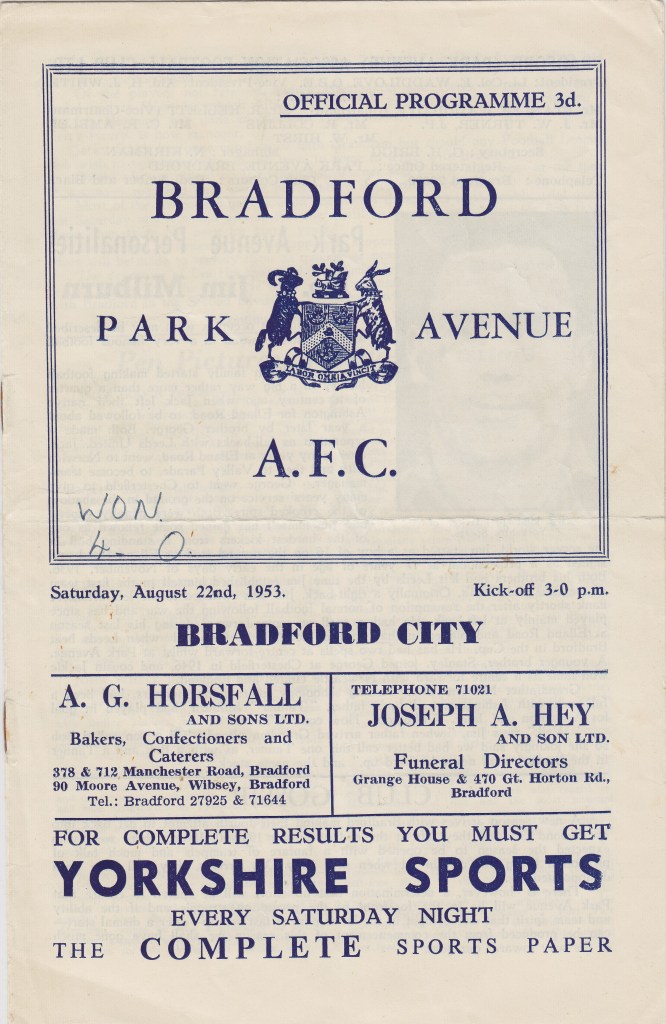
bpa v bcafc aug-53

1939-40 – The lost season


George Hinsley
George Hinsley

By Ian Hemmens

By 1939 the dark clouds gathering over Europe had become almost storm-like. The year before had seen Nazi Germany annexe neighbour Austria, the ‘Anschluss’ and by deception of protecting ethnic Germans in the Czech ruled Sudetenland secured more land. Czechoslovakia & Polish held Silesia were next and when British Prime Minister came back from his meeting with Adolf Hitler waving his piece of paper proclaiming ‘Peace in our time’, even the most optimistic were having doubts about a forthcoming conflict.

Even as early as April 1939, the FA had released a circular to clubs asking all professionals to join the Territorial Army to encourage the youth of the land to do likewise. Mindful of the furore in 1914-15 when football carried on despite the protests of class ridden parsimonious rantings of various branches of the establishment.

Football’s hands were tied by the contract system and in fact proved positive as recruitment vehicles for the forces. Wary of being attacked again, the FA were in fact proactive by negotiating with the War office for players to take part in military training. Although voluntary, several clubs signed up en bloc to the Territorials or potentially vital industries. The Football League also pronounced that the clubs didn’t have to pay any player who was involved in military training so as to minimise the financial strain on clubs.

The new season saw all teams re-elected to the regional 3rd Divisions, Hartlepools & Accrington Stanley in the North and Bristol Rovers & Walsall in the South being the fortunate clubs. Another new innovation was uniform numbering on shirts for specific positions. As the new season drew close, clubs took part in Jubilee Fund matches. This was a project set up the year before to celebrate the Football League’s half century and was to help raise funds for ex-players who had fallen on hard times or had to give up due to injury. It mainly featured local ‘Derby’ matches where possible and in the 1938 series, City once more succumbed to neighbours Bradford Park Avenue by a 1-4 scoreline at Valley Parade in front of a 6000 crowd.

One interesting note of this match was that it was the only senior appearance for City of Malcolm Comrie, the nephew of former City Centre Half Jimmy Comrie who had perished in the Great War.

Bradford City travelled the short distance to Park Avenue for a match which ended in a 3-2 victory for the home side in front of a crowd just short of 5000. City fielded new signings in keeper Billy McPhillips the ex-Newcastle United custodian, former Spurs schemer Almer Hall, Jimmy Lovery & Duncan Colquhoun, a forward from Southport.

These players complemented the established players like Charlie McDermott, Spud Murphy, Charlie Moore, Archie Hastie & Alf Whittingham, Hastie & debutant Colquhoun scored the goals.

Fred Westgarth
Fred Westgarth

The season before, 1938-39, City had finished a promising 3rd in the table although they never really threatened the eventual winners Barnsley who finished a full 15 points better off. City had a prolific goalscorer in Jack Deakin who had finished with 23 goals in just 28 games ably supported by Jimmy Smailes and Archie Hastie. The team had a good solid core of players with a couple of promising youngsters like George Hinsley, Joe Harvey & the aforementioned Whittingham in their ranks. Confidence was high for a concerted push for a return to 2nd tier football after a 4 year gap. Manager Fred Westgarth, despite losing promising players like Gordon Pallister to Barnsley & future stars George Swindin & Laurie Scott to Arsenal was quietly building a solid squad of experience and youth for the forthcoming campaign.

The season began on August 26th 1939 at Valley Parade against the previous seasons bottom club Accrington Stanley in front of a 7000 crowd. The 4 newcomers again lined up for City who selected the following: McPhillips, Murphy, McDermott, Molloy, Beardshaw, Moore, Lovery, Hall, Deakin, Hastie & Colquhoun. The game didn’t go to plan as Stanley managed a shock 2-0 win and took the points back to East Lancashire.

Only the previous year, Runner-up Doncaster Rovers managed a 5 figure crowd in the division. The days largest attendance was at Molineux for the 1st Division clash between Wolves and Arsenal with 47000 turning up. Opening day highlights included 4-0 wins for Manchester United against Grimsby Town! Yes, Grimsby back then were in the 1st Division and today, sadly, they are no longer in the Football League. Stoke City also recorded a 4-0 victory over Charlton Athletic, the Stoke side having a precocious winger named Stanley Matthews in their line up.

In Division 2, Bradford Park Avenue made it a sorry day for Bradford football going down to a 2-0 defeat at Saltergate against Chesterfield, whilst the result of the day was Crystal Palace’s 5-4 victory away at Mansfield in the 3rd Division (S). There were also several names other than Grimsby Town who are no longer Football League teams; Barrow, Southport, Wrexham, Chester, New Brighton, Aldershot, Torquay United, Darlington, Stockport County, Lincoln City & finally Gateshead.

The second round of matches started almost immediately 2 days later on the 28th August. A day later, Bradford Park Avenue, this time on home turf once again lost, a 3-0 reversal to Luton Town before 7000 supporters. A day later City travelled to the Wirral to face New Brighton at Sandheys Park. 5 changes were made by Manager Westgarth, 3 due to injury and 2 for selection changes. Charlie McDermott, Duncan Colquhoun & Jack Deakin were injured and City lined up with McPhillips, Murphy, Brown, Molloy, Hinsley, Moore, Lovery, Beresford, Whittingham, Hastie & Smailes.

The return of Jimmy Smailes added to the attacking prowess but again, City went down to a 2-1 defeat, Alf Whittingham opening his account for the season. 2 games & 2 defeats, not the start the club wanted after the hopes of pre-season.

September 2nd, the day before War was declared saw round 3 of the leagues programme. Ted Drake scored 4 of Arsenals 5 against Sunderland in front of only 17000 fans. The growing fears and uncertainty of the national situation was clearly having an effect on crowd participation as not one crowd in the 1st Division reached 20000. Tommy Lawton hit his 3rd goal for Everton. The surprise package with maximum points and sitting proudly at the top of the 1st division table were Blackpool.

In Division 2, Bradford Park Avenue finally got off the mark with 2-2 home draw with Millwall although this result left them bottom and propping up the table. Newcastle United had the result of the day with an 8-1 thrashing of Swindon at St. James’ Park, all 5 of their forwards contributing to the scoreline.

City travelled to Holker Park to face Barrow in their 3rd game and came away with a 2-2 draw to claim their 1st point. Stan Scrimshaw came in for Frank Beresford in the only change and goals from Hinsley & Hastie secured the point. After 3 games, City were next to bottom with only pointless Stockport County below them. The loss of ace goalgetter Jack Deakin was posing a problem. Apart from the odd Wartime game, he never played for City again leaving a very impressive record including FA Cup games of 51 Goals in only 68 games.

The next day, Sunday 3rd September 1939 at 11am came the announcement that everyone was expecting and fearing. Football was the last thing on people’s minds as it was announced that once again, the country was at war with Germany.

An immediate ban on all crowds was announced and a day later, mindful of the situation in 1915, the League Management Committee declared the season was officially over. On September 8th, all players contracts were ended though the clubs retained their registrations. Players who hadn’t already signed up or were committed to vital jobs had to find alternative employment until they were called to arms.

Six clubs immediately decided to close down for the duration of the conflict and Arsenals Highbury was taken over by the local ARP. By the 14th September it was announced that friendly games could go ahead but only in certain areas as long as police approval was given but restrictions on attendances were still in place. This time around, the Government realised that football was a release and a benefit to morale to the millions of workers aiding the War effort.

On the 25th the War Committee announced plans to start 8 regional leagues on the 21st October. Professional players would receive £1.50 a week but no bonuses. The guest system as used in the Great War would again operate. The obvious restrictions on travel were in place and because of the national blackout, long journeys by coach were not possible.

The ongoing situation once again meant that clubs had to use whoever was available with veterans, local promising youths and servicemen stationed nearby could all be called upon to fulfil fixtures. Obviously, the clubs in naval ports and garrison towns benefitted best with clubs like Aldershot able to field an almost full international side from top players stationed in the town.

From a Bradford City point of view, the club settled into the Wartime regional structure trying to get by week by week. The departure of Fred Westgarth to his old club Hartlepools in 1943 was a blow to the club but Board member Cllr. Bob Sharp stepped in to steady the ship through uncertain times with very few highlights to mention. George ‘Spud’ Murphy was selected to play for Wales in several wartime international games, although not Official games, he was the first City player to gain International honours since Irishman Sam Russell in 1930. The club managed to keep going without any real success or failures until the War finally ended in 1945.

The length of the conflict, apart from casualties, saw the end of many players careers being too old to carry on playing or unable to medically due to wounds.

Only 4 players from Citys last pre-war squad started the new full season in 1946. Stan Scrimshaw, George Murphy, George Hinsley & Alf Whittingham. A 5th place finish was an excellent finish for the club after the long dark days just gone by. The War had taken its toll on all aspects of life and from footballs point of view some players were on the cusp of a career but never played again whilst others who were given a chance were discovered almost by accident and became almost overnight heroes.

The 3 games of the 1939-40 season were officially wiped from the records as the Declaration of War overtook all aspects of any normality of lifestyle and it became known as the season that never existed.

For reference, thanks to:

  • ‘Bradford City – A Complete Record’ by Terry Frost
  • ‘The Men Who Never were’ by Jack Rollin & Mike Brown
  • Charles Buchan Football Monthly – Various
  • Various Internet Sources